Choosing a solar irrigation pump is not just a matter of comparing panel wattage or advertised flow rates. The right system must lift enough water at the required pressure, even when the well level changes or sunlight softens behind clouds. A pump that looks powerful on a product page may disappoint in a deep borehole. Small details matter.
The need is substantial. FAO AQUASTAT estimates that agriculture accounts for about 70% of global freshwater withdrawals. Meanwhile, IRENA’s Renewable Power Generation Costs in 2023 reports that utility-scale solar electricity costs fell 56% between 2010 and 2023. These figures explain why solar pumping is attracting attention, but falling solar costs do not guarantee a good installation. Pump sizing, local water conditions, storage, and maintenance still shape real-world performance. A few figures cannot tell the whole story.
This guide explains How to choose a solar pump for irrigation by comparing practical factors: daily water demand, total dynamic head, pump type, controller compatibility, and seasonal sunlight. It also considers the full system cost, including panels, wiring, pipes, and any water tank. Before buying, measure the water source and estimate crop needs with local conditions in mind. That estimate can be imperfect. Recheck it. A farmer’s field notes may reveal patterns that a catalogue misses, while a qualified installer can verify the calculations and equipment match.
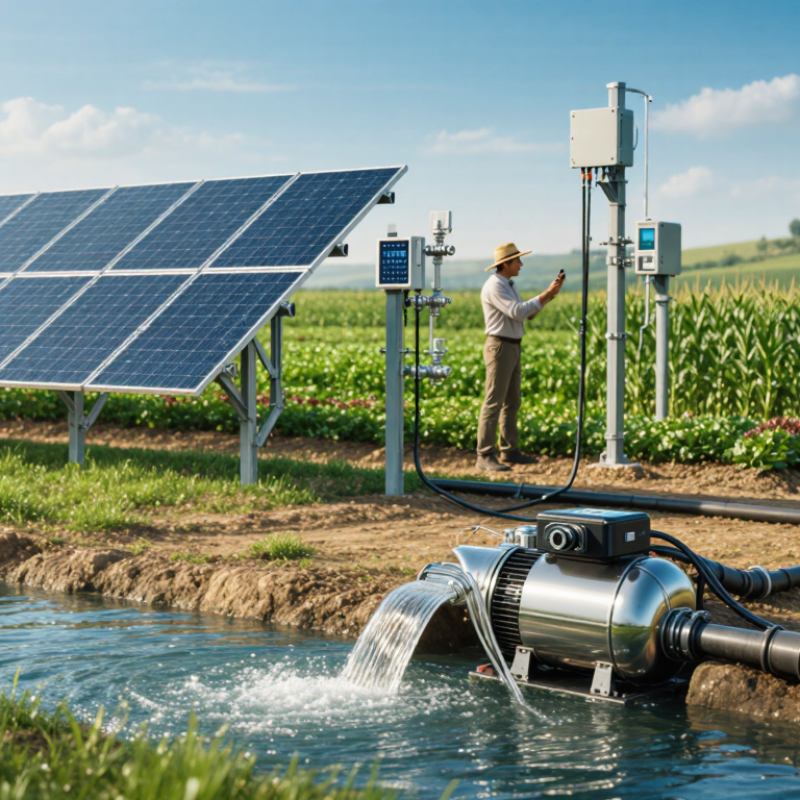
A solar irrigation pump converts sunlight into water movement. Photovoltaic panels generate direct-current electricity, which a controller adjusts for the motor. The motor drives an impeller or a displacement mechanism, drawing water from a well, pond, or canal. A controller may also stop the pump when a storage tank is full or a well runs dry. No fuel is burned onsite. Water can be stored in a tank for cloudy hours, often avoiding the added cost and maintenance of batteries.
The setup is straightforward. Sizing it is not. Pump output depends on sunlight, water depth, pipe losses, and the required flow rate. A pump that lifts water 30 metres may deliver far less water than it does from a shallow pond. Check the pump curve against the farm’s daily water demand, not just its advertised peak flow. IRENA’s Renewable Capacity Statistics 2024 reports that solar power capacity grew by 346 GW worldwide in 2023. That signals rapid expansion of the underlying technology, but it does not guarantee a suitable irrigation design. Clouds matter. So do seasonal water levels. A practical system should be checked against local sunlight records and measured water needs; estimates can still miss real field conditions.
Solar irrigation pumps are not one-size-fits-all. Submersible pumps work well in deep wells, where the water level sits far below the field. They push water upward from beneath the surface and keep the pump protected from sun and dust. Check the well’s depth and expected flow before choosing one. A pump that lifts water too high may deliver only a thin trickle.
Surface pumps draw water from ponds, canals, or shallow tanks. They are easier to inspect, but need to sit close to the water source. Screw and other positive-displacement pumps can suit lower flow rates or higher lift requirements. Direct-current pumps often run efficiently from solar panels, while systems with controllers or storage can help manage changing sunlight. Extra components add cost and maintenance, though, and are not always necessary.
Tips: Measure the distance to the field, elevation change, and daily water need. These details matter more than panel wattage alone. Keep the intake clear of leaves and silt, and protect exposed pipes from heat. Small leaks reduce delivery. Match the pump to the water source, then check its flow during the hottest part of the day; test results can be imperfect, so leave some room for seasonal changes.
Choosing a solar irrigation pump starts with the water source and the field’s real demand. Measure the vertical lift, pipe length, and outlet height; friction in long or narrow pipes reduces flow. Measure both. Then estimate how many liters your crops need on a hot day, not just on an average day. A pump’s advertised maximum flow may apply only at low lift. Check its performance curve at your expected total head.
Match the pump type to the water source. Submersible models suit deeper wells, while surface pumps work for shallow sources with adequate suction conditions. Check the water level during the dry season, too. It may fall farther than expected. Solar output changes with clouds, shade, and season, so size the panels for the hours when irrigation is needed. A storage tank can hold water for later use; batteries add cost and may need replacement.
Look for dry-run protection and a filter suited to the water’s sediment. Fine sand can wear pump parts, while a clogged filter can reduce delivery. Ask for flow data at your operating head, and compare it with your irrigation schedule. A practical test matters. One planning mistake is sizing around a bright, clear day. That choice can leave crops short of water during cloudy stretches, so build in a realistic margin without buying far more capacity than the system needs.
Size the pump around two figures: required flow and total dynamic head. Required flow is the water used by all irrigation devices running at the same time. For example, 40 drip emitters rated at 2 liters per hour need 80 liters per hour in that zone. Check the emitter or sprinkler specifications, then add the demand for any other devices operating together. Do not size from the whole field’s area alone.
Head is the height and pressure the pump must overcome. Add the vertical lift from the pumping water level to the outlet, the pressure needed at the irrigation equipment, and losses from pipes, bends, and filters. A filter can add resistance as it collects debris. Measure the water level while pumping if possible; a well’s level may drop under load. Small details matter.
Compare the flow and head with the pump’s performance chart, not just its maximum-flow figure. Solar output changes with clouds, season, and panel angle, so check expected performance for your site and operating hours. If daily irrigation demand is 1,200 liters and the system can pump for six effective hours, it needs to average 200 liters per hour at the required head. Keep a practical buffer, or use a storage tank to cover cloudy periods. These estimates are useful, but they can be wrong if the water level or pipe losses were guessed.
Comparing solar irrigation pumps starts with the water source and lift, not the biggest flow figure on a product sheet. A pump rated at 60 litres per minute may deliver much less when raising water 20 metres through a long, narrow pipe. Check its performance curve at your actual total dynamic head, including elevation and pipe friction. Small detail. It changes everything.
Match the solar array to the pump’s operating voltage and power requirements. A controller with maximum power point tracking can help the pump use changing sunlight efficiently. For daytime irrigation, direct solar operation avoids battery replacement and storage losses. But output may dip under clouds. If watering must continue after sunset, compare battery capacity, added cost, and maintenance needs. A larger panel is not automatically a better match.
Look for dry-run protection, overload shutdown, and accessible replacement parts. These features matter when a well level falls or dust coats the panels. Also compare filter requirements: sandy water can wear pump components quickly. It is easy to focus on peak flow and overlook service access. That choice may need reconsidering. Before buying, estimate daily water demand and compare it with expected output during weaker sunlight, not just ideal noon conditions.
| Pump type | Typical installation | Best suited to | Flow and head characteristics | Strengths | Important limitations | What to check before choosing |
|---|---|---|---|---|---|---|
| Surface centrifugal | Mounted beside a pond, tank, canal, or shallow well; the inlet pipe draws water into the pump. | Open water sources and shallow water supplies where the pump can be installed close to the water. | Often a good fit for relatively high flow at low-to-moderate total head. Actual flow falls as total head and pipe losses increase. | Easy to access for inspection and maintenance; suitable for transferring water to storage or irrigation lines. | Must be installed within its suction-lift limits. Air leaks, a poorly primed line, or excessive suction lift can prevent reliable pumping. | Confirm the pump’s specified suction lift, total dynamic head, required flow, inlet-pipe diameter, and whether the model is self-priming. |
| Submersible centrifugal | Installed below the water level in a borehole, well, or storage tank. | Wells and boreholes, especially where the water level is too deep for a surface pump to draw effectively. | Available in designs for a range of flow and head requirements. Multistage designs can provide higher head; output depends on the pump curve and available solar power. | Pushes water upward rather than relying on suction; the submerged motor and pump do not need surface priming. | Requires suitable borehole dimensions, water clearance, and protection against dry running, sediment, and overheating. | Use the dynamic water level while pumping—not just well depth—to calculate total dynamic head. Check borehole diameter, water quality, and controller protections. |
| Helical-rotor (progressive-cavity) submersible | Submerged in a well or borehole; water is moved through a rotor and stator. | Applications needing steady delivery at relatively high head and modest flow, such as filling an elevated tank. | Typically delivers lower flow than a centrifugal pump of comparable application size, while maintaining useful output against higher head. | Can suit high-lift, lower-flow duties and may provide more consistent delivery as operating conditions vary. | The rotor and stator are wear components. Abrasive sand and unsuitable water quality can shorten service life. | Compare the manufacturer’s flow-versus-head curve at the expected operating point; check sand tolerance, replacement-part availability, and dry-run protection. |
| Positive-displacement surface pump | Installed above ground and connected to a water source, subject to the pump’s suction requirements. | Small, controlled-volume applications where measured or relatively low flow is more important than moving large volumes quickly. | Moves a defined volume per cycle or rotation; flow is less directly tied to head than with a centrifugal pump, but pressure and speed limits still apply. | Can provide controlled delivery for small-scale watering or dosing tasks. | Many designs are not intended for high-volume irrigation. Valves or other moving parts may need periodic maintenance. | Verify the permitted pressure, flow rate, duty cycle, water cleanliness requirements, and compatibility with the irrigation layout. |
| Solar-powered pump system with battery storage | A compatible pump supplied by solar panels and a battery-based power system. | Sites that need pumping outside strong sunlight hours or require a more scheduled operating window. | Performance depends on the pump, solar array, battery capacity, controller, and total head. Battery capacity determines how much stored energy is available after sunlight decreases. | Can extend pumping availability beyond peak solar hours when correctly sized. | Batteries add cost, losses, maintenance, and eventual replacement; storage does not increase the pump’s rated hydraulic capacity. | Compare daily water demand with solar production and usable battery capacity. Check controller compatibility and battery protection requirements. |
Selection note: Pump output is not a fixed value for a pump type. Size a system using the required daily water volume, the source’s dynamic water level, elevation change, pipe length and diameter, fittings, and irrigation pressure. Together, these determine total dynamic head. Confirm the selected pump’s published performance curve at that operating point, and check that the solar array and controller can supply the required power. Flow and head descriptions above are comparative guidance, not guaranteed specifications.
Measure vertical lift, pipe length, and outlet height. Estimate crop water needs on a hot day, in litres.
Greater lift and long, narrow pipes reduce flow. Check the performance curve at your total head. Small details matter.
Submersible pumps suit deeper wells. Surface pumps suit shallow sources with adequate suction. Check dry-season water levels, too.
Match panel output to the pump’s voltage and power needs. Consider cloudy hours and seasonal sunlight. Bright noon is not every day.
Direct solar operation can avoid battery replacement and storage losses. A tank can store water for later use. Batteries add cost.
Look for dry-run protection and overload shutdown. These can help when well levels fall or sunlight changes.
Fine sand can wear pump parts. A clogged filter can reduce delivery. Check filter needs for your water.
Compare daily water demand with expected output in weaker sunlight. Check access to replacement parts. I might still underestimate cloudy spells.
Solar pumps use energy from photovoltaic panels to move water from a well, river, or storage tank to crops, often without relying on grid electricity. The right setup depends on the water source, irrigation method, and daily demand. Common options include surface pumps for shallow sources and submersible pumps for deeper wells; systems may also use direct solar power or batteries to provide more consistent operation when sunlight varies.
How to choose a solar pump for irrigation starts with estimating the required flow rate and the total pumping height, including the distance and elevation the water must travel. Consider the size of the irrigated area, crop water needs, sunlight conditions, panel capacity, pump efficiency, and maintenance requirements. Compare models by their performance across changing sunlight levels, durability, controls, and compatibility with storage or drip irrigation. Proper sizing helps deliver enough water while avoiding unnecessary energy use and equipment costs.

ApexSun Solar