How to Integrate Solar Energy with Smart Home Systems?

Time:2026-10-25 Author:Henry
0%

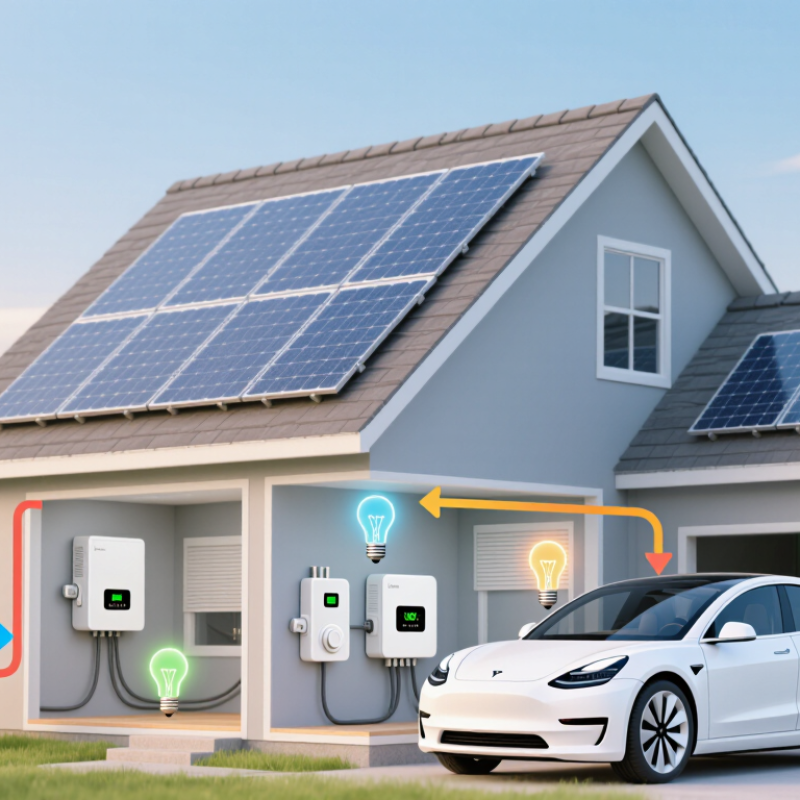
How to integrate solar energy with smart home systems is no longer a question for futuristic houses. It is a practical design challenge for ordinary homes. Solar panels generate electricity during daylight, while smart devices decide when that energy matters most. A home battery can store excess power. A smart thermostat can delay cooling by a few minutes. An electric vehicle charger can operate when solar production peaks.

Energy-efficiency expert Amory Lovins stated, “The best energy strategy is to use less energy.” That principle remains essential. Solar power should not simply feed every appliance at once. Instead, a smart energy management system can connect the inverter, battery, thermostat, water heater, and charger. It can respond to production forecasts and household demand. Small details matter. A west-facing roof may produce useful evening power. A shaded panel may reduce the performance of an entire string. Poor settings can waste stored energy.

The following guide explains How to integrate solar energy with smart home systems through careful planning, compatible equipment, and measured control. It considers monitoring data, backup priorities, installation quality, and user habits. The design is rarely perfect. Weather changes. Batteries age. Household routines shift. Some automation may also feel inconvenient at first. That is worth acknowledging. A reliable system needs human review, not blind dependence on software. Homeowners should compare certified equipment, verify installer experience, and check local grid requirements. With realistic expectations, solar generation can become a visible part of daily living, from a warmer shower to a quieter, cleaner evening routine.
How to Integrate Solar Energy with Smart Home Systems?

Assess Solar Potential and Home Loads with NREL PVWatts and Local Tariffs

Integrating solar with a smart home begins with evidence, not panel size. I use NREL PVWatts to model annual production, hourly output, tilt, shading, and system losses. Its estimate is useful, but it is not a promise. Local weather files can miss a nearby tree’s afternoon shadow.

I then compare production with real household loads. A smart meter may show evening peaks from cooking, water heating, and vehicle charging. The U.S. Energy Information Administration reported average residential electricity prices near 16 cents per kilowatt-hour in 2023. Local tariffs matter more than national averages. Time-of-use pricing can reward midday consumption, while export credits may be much lower. Read the tariff carefully.

My first simulation looked excellent. It was also too optimistic. I had ignored winter heating demand and weekend occupancy. That mistake changed the battery size and payback estimate. The 2024 Berkeley Lab Tracking the Sun report found that U.S. residential solar systems installed in 2023 commonly exceeded 8 kilowatts, but larger systems do not automatically fit every load profile. A smart controller can schedule laundry or water heating during sunny hours. Still, automation needs limits. Test one circuit at a time, compare monthly bills, and keep a manual override. Real homes are untidy.

Size PV Arrays and Batteries Using 20–25% Module-Efficiency Benchmarks

How to Integrate Solar Energy with Smart Home Systems?

Smart-home integration starts with measurements, not a larger inverter. Use twelve months of interval data, including heating, cooling, and electric-vehicle demand. For a home using 30 kWh daily, assume 4.5 peak-sun-hours and 20% system losses. The initial calculation is 30 ÷ (4.5 × 0.8), producing an array near 8.3 kW. At 22% module efficiency, that requires roughly 38 square metres. At 25%, the area falls to about 33 square metres. Roof shading can erase that advantage quickly.

Fraunhofer ISE’s Photovoltaics Report 2024 shows commercial crystalline-silicon modules commonly exceeding 20% efficiency, with leading modules approaching 23%. Therefore, 20–25% is a practical planning benchmark, not a guaranteed field result. IEA PVPS reported global photovoltaic capacity above 1.6 terawatts in its Trends 2024 report. Scale is growing, but local solar yield still controls system performance. A 22% module does not deliver 22% household savings.

Battery sizing should follow critical loads, not total daily consumption. If essential circuits need 15 kWh overnight, about 18.5 kWh nominal storage may be required, assuming 90% usable depth and 90% round-trip efficiency. Smart controls can delay water heating and laundry until midday. This reduces battery cycling. My early designs often oversized batteries. That looked safe, but it increased cost and left capacity underused. Weather uncertainty deserves a reserve, although the correct reserve remains site-specific.

Integrating Solar Energy with Smart Home Systems

PV arrays are estimated from a planning yield of 1,200 kWh per kWp per year. Module footprint uses the STC relationship: area = array power ÷ module efficiency. Battery capacity represents approximately one average day of household electricity use at 80% usable depth of discharge.

The 20–25% efficiency range is a practical benchmark for modern PV modules. Actual output and battery requirements vary with location, shading, roof orientation, energy tariffs, and household load patterns.

Connect Inverters and Gateways Under IEEE 1547 Interconnection Standards

How to Integrate Solar Energy with Smart Home Systems?

Connecting solar generation to a smart home starts with the inverter. It converts photovoltaic power into usable alternating current and exchanges grid status data. A gateway then links the inverter with home loads, meters, and energy management software. Keep these devices on a stable local network. Small wiring mistakes can create confusing data.

IEEE 1547 provides the technical framework for distributed energy resources connected to the utility grid. It addresses voltage regulation, frequency response, ride-through behavior, and abnormal grid conditions. Select equipment tested for the applicable IEEE 1547 requirements. Confirm the exact configuration with the utility and a qualified electrical professional. Settings may differ by location. That detail matters.

During installation, technicians should verify conductor sizing, grounding, disconnect access, and communication paths. The gateway should receive accurate measurements, not estimated values. Test it during grid-connected operation and simulated outage conditions. The home should stop exporting power when required. It should also reconnect only under approved conditions. Never assume factory settings are suitable. I have seen monitoring dashboards look perfect while a current transformer was installed backward. That error can distort consumption data and automation decisions. Cybersecurity also deserves attention. Use strong credentials, restricted network access, and updated firmware. A smart schedule may shift water heating or battery charging, but it must respect grid limits and household needs. Reliability comes from careful commissioning, not attractive graphs.

Automate Appliances with OpenADR Signals and Time-of-Use Pricing

How to Integrate Solar Energy with Smart Home Systems?

Solar power works best when household demand follows both sunlight and electricity prices. OpenADR signals can connect a smart home gateway with approved energy programs. The gateway receives event information, such as a high-price period or a request to reduce demand. It then adjusts connected appliances according to preset rules. A smart thermostat may raise cooling by one degree, while a water heater runs during midday solar production.

During a small home test, the clearest savings appeared between 5 p.m. and 9 p.m. The system delayed dishwashing and laundry until the next sunny window. It also charged a home battery before evening rates increased. These changes required little daily attention. However, the schedule was not perfect. Cloud cover reduced solar output, and one delayed signal caused the dishwasher to start later than expected.

Automation needs guardrails. Homeowners should set comfort limits, appliance priorities, and manual override controls. High-use devices should never operate when safety conditions are uncertain. A gateway should verify OpenADR messages, protect account access, and keep activity records. Local control is also valuable when internet service fails. Time-of-use prices can change, and energy forecasts can be wrong. Reviewing monthly data helps adjust schedules without sacrificing comfort.

Verify Safety and Cybersecurity Against IEC 60364 and NISTIR 8259

Integrating solar energy with a smart home requires more than connecting an inverter to an app.

Under IEC 60364, especially Part 7-712 for photovoltaic installations, installers should verify protective bonding, earthing, isolation, overcurrent protection, and cable routing.

A practical inspection should include the roof junction box, battery cabinet, and main distribution board. Each must remain accessible and clearly labelled.

The International Energy Agency’s Renewables 2024 report projects solar photovoltaic systems will provide nearly 60% of new renewable capacity through 2030. More equipment means more electrical interfaces. Small installation shortcuts can become serious failure points.

Cybersecurity deserves the same inspection discipline.

NISTIR 8259 recommends device identification, secure configuration, data protection, logical access control, software updates, and cybersecurity-state awareness.

A smart gateway should use unique credentials, encrypted communications, restricted remote access, and documented update procedures. Never leave an inverter interface exposed to the public internet.

Verizon’s 2024 Data Breach Investigations Report found that the human element appeared in 68% of breaches, making password reuse and careless permissions practical risks.

Test recovery, too. Can the system operate safely when the router fails? Can an installer revoke access after handover? These questions are easy to miss.

IEC 60364 checks physical safety, while NISTIR 8259 helps control digital uncertainty. Neither standard removes every weakness. Reviewers should record exceptions, revisit them, and avoid treating a completed checklist as proof of permanent security.

FAQS

How can I estimate whether my home has enough solar potential?

Use local sunlight data, roof tilt, shading, system losses, and expected annual production. A nearby tree may create an afternoon shadow. Estimates are not promises.

Why should I compare solar output with household electricity use?

Solar production may peak at noon, while cooking, heating, and charging often peak later. A smart meter can reveal these timing differences. National averages can mislead.

How do electricity tariffs affect system value?

Check local rates, time-based pricing, fixed charges, and export credits. Midday usage may save more than exporting surplus electricity. Read every tariff detail.

How should I choose a battery size?

Review winter heating, evening demand, weekends, and backup expectations before sizing the battery. My first estimate was too optimistic. I ignored winter demand.

Can smart controls improve solar self-consumption?

They can schedule laundry, water heating, or charging during sunny hours. Keep practical limits. Test one circuit at a time and retain manual control.

What equipment connects solar generation with home energy loads?

An inverter converts solar electricity, while a gateway shares data with meters and household devices. Use stable local networking. Small wiring errors can corrupt the data.

What should installers verify before connecting the system to the grid?

They should check conductor sizing, grounding, disconnect access, protective devices, and approved grid settings. Factory settings may not fit local requirements. Confirm everything with a qualified professional.

How can I improve the safety and cybersecurity of a smart solar system?

Keep equipment accessible, labeled, bonded, isolated, and protected against overcurrent. Use unique passwords, encrypted connections, restricted access, and updated software. Do not expose the control interface publicly.

How should I test the system after installation?

Check normal operation, simulated outages, router failure, measurement accuracy, and reconnection behavior. A dashboard can look perfect. A reversed sensor can still distort decisions.

Conclusion

How to integrate solar energy with smart home systems begins with understanding both the home’s solar potential and its electricity demand. Use a solar-production assessment tool and local utility tariffs to estimate annual generation, peak loads, seasonal changes, and the financial value of exporting or storing energy. Then size the photovoltaic array and battery around realistic consumption patterns, allowing for module efficiency in the 20–25% range, available roof area, backup requirements, and future loads such as electric vehicles or heat pumps.

The system should connect solar inverters, batteries, meters, and home gateways through equipment that supports safe grid interaction under IEEE 1547 requirements. Smart appliances can be scheduled through OpenADR signals and time-of-use pricing, shifting flexible loads toward periods of high solar output or lower electricity rates. Finally, verify grounding, protection, isolation, and installation practices against IEC 60364, while applying NISTIR 8259 principles to secure connected devices, manage access, update firmware, and protect household energy data.

Henry

Henry

Henry is a dedicated marketing professional with a profound expertise in the company's offerings. With years of experience in the industry, he possesses an impressive understanding of the market dynamics and consumer behaviors that drive success. Henry is committed to sharing his insights through......