When exploring solar energy options, you may wonder, "What is the difference between monocrystalline and polycrystalline solar panels?" According to Dr. Emily Solar, a leading expert in renewable energy, "Choosing the right solar panel can significantly impact energy efficiency and long-term savings." This statement emphasizes the importance of understanding these two popular types of solar panels.
Monocrystalline panels are made from a single crystal structure, giving them higher efficiency rates. They tend to perform better in low-light conditions. In contrast, polycrystalline panels, composed of multiple crystal fragments, are generally more affordable but slightly less efficient. The visual differences are notable: monocrystalline panels often have a uniform dark appearance, while polycrystalline panels display a speckled blue hue.
Many homeowners face the dilemma of selecting the right type of panel. The choice hinges on factors like budget, available space, and energy needs. Reflecting on your options requires careful consideration. While monocrystalline panels may offer better performance, polycrystalline panels could serve well for those on a budget. Ultimately, weighing the pros and cons of each type is vital for making an informed decision.
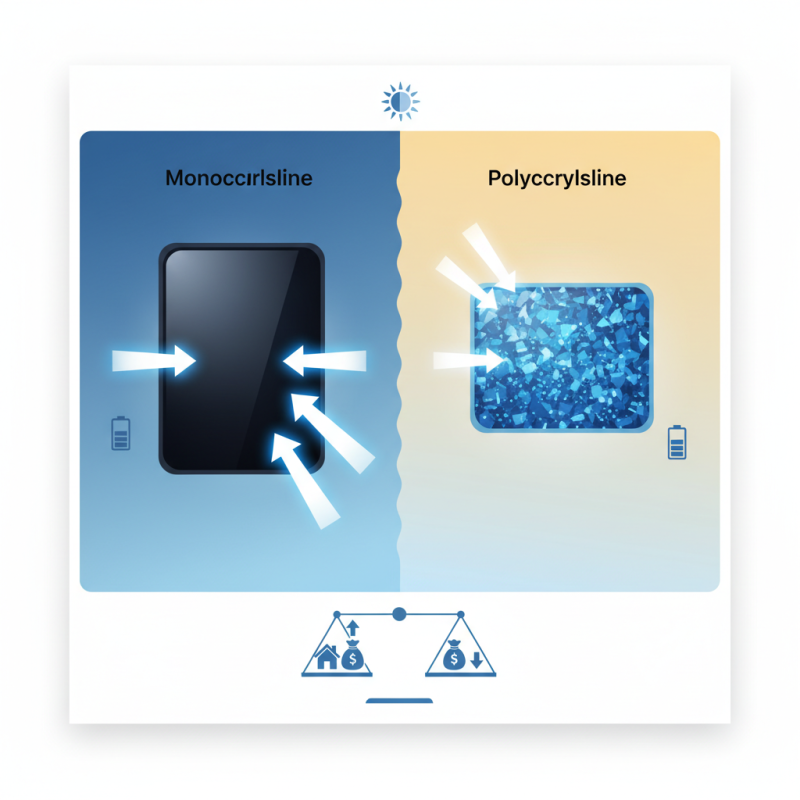
Monocrystalline Solar Panels: Advantages and Characteristics
Monocrystalline solar panels have gained popularity due to their high efficiency and sleek design. These panels are made from a single crystal structure, allowing for optimal performance. They typically achieve an efficiency rate of around 20-22%, making them one of the most effective types of solar technology available. A report by the National Renewable Energy Laboratory (NREL) indicates that monocrystalline panels can perform better in low-light conditions as well.
The benefits of monocrystalline panels extend beyond efficiency. They occupy less space and have a longer lifespan, often lasting 25 years or more. Their aesthetic appeal is another factor driving consumer preference. However, they have a higher initial cost compared to polycrystalline panels. This premium can be a barrier for some potential users. In a study by SolarPower Europe, 60% of site assessments noted cost as a significant consideration.
Choosing monocrystalline panels requires a balance of factors. While their benefits are clear, cost and financial returns must be assessed. The right choice varies by situation. Evaluating energy needs alongside installation costs helps homeowners make informed decisions. A detailed cost-benefit analysis can aid in this process, while also considering potential energy savings. Understanding these aspects leads to better solar energy investments.
Polycrystalline Solar Panels: Advantages and Characteristics
Polycrystalline solar panels have gained popularity in recent years. They are made from multiple silicon crystals, giving them a distinct bluish color. This unique structure leads to certain advantages. Their manufacturing process is less energy-intensive compared to monocrystalline panels. According to the National Renewable Energy Laboratory (NREL), polycrystalline panels can cost about 10-15% less to produce.
One major characteristic is their performance in various temperatures. Polycrystalline panels tend to have a lower temperature coefficient than monocrystalline counterparts. This means they perform better in higher temperatures. A study by the Solar Energy Industries Association (SEIA) indicates that in hotter climates, polycrystalline panels can be more efficient, sometimes by 1-2% under extreme heat.
Despite these advantages, some challenges exist. Polycrystalline panels generally have a slightly lower efficiency rate, typically around 15-17%, compared to 18-22% for monocrystalline. Their varying performance might not be ideal for every installation. Potential buyers should weigh these factors carefully before choosing. The decision between polycrystalline and monocrystalline remains complex, requiring thorough research and consideration of one's specific energy needs.
Monocrystalline vs Polycrystalline Solar Panels Key Differences Tips
| Characteristic |
Monocrystalline Solar Panels |
Polycrystalline Solar Panels |
| Efficiency |
15% - 20% |
13% - 16% |
| Cost |
Higher |
Lower |
| Lifespan |
25+ years |
20 - 25 years |
| Space Requirement |
Less space required |
More space required |
| Temperature Tolerance |
Better performance in high temperatures |
Less efficient in high temperatures |
| Aesthetics |
Uniform dark color |
Bluish color with a speckled look |
Key Differences Between Monocrystalline and Polycrystalline Panels
Monocrystalline and polycrystalline solar panels are the two most popular types in the market today. Understanding their key differences is crucial for making informed decisions.
Monocrystalline panels, known for their high efficiency, typically convert around 20% to 25% of sunlight into electricity. This makes them ideal for residential and commercial applications where space is limited. Meanwhile, polycrystalline panels offer a lower efficiency rate, usually around 15% to 20%. However, they are often more cost-effective, making them an attractive option for larger installations.
The manufacturing process also varies significantly between the two types. Monocrystalline panels are made from a single crystal structure, leading to a uniform appearance and higher performance. In contrast, polycrystalline panels are created from multiple crystal fragments. This can result in a less efficient solar energy capture. A report by the International Renewable Energy Agency highlighted that the global solar energy market continues to grow, with a steady increase in installations of both types. Yet, it noted that the choice often relies on specific project needs and budget constraints.
Durability is another key area where these panels differ. Monocrystalline panels tend to last longer, often backed by a 25-year warranty. Polycrystalline panels may not last as long but usually come with a lower upfront cost. This discrepancy can lead homeowners to reflect on long-term versus short-term investments. Ultimately, the right choice should align with individual energy needs and financial goals. Balancing efficiency, durability, and cost can be challenging but important for maximizing energy production.
Factors to Consider When Choosing Solar Panels
When choosing between monocrystalline and polycrystalline solar panels, several factors come into play. Efficiency is a primary consideration.
Monocrystalline panels typically have higher efficiency rates, often exceeding 20%. Polycrystalline panels, on the other hand, tend to hover around 15-18%. This difference can significantly impact the amount of energy produced, especially for limited roof space.
Cost is another critical factor. Monocrystalline panels usually come with a higher price tag due to their manufacturing process. However, their longevity and efficiency might justify the investment over time. In contrast, polycrystalline panels are more affordable upfront, which can be appealing for budget-conscious buyers. It is essential to weigh your short-term budget against long-term savings.
Environmental conditions also play a role. If you live in an area with limited sunlight, the efficiency of monocrystalline panels may prove beneficial. However, polycrystalline panels perform better in high-temperature environments. Reflecting on local weather patterns can provide valuable insights into what type of panel might work best for your situation. Choosing the right solar panel is not just about numbers; it’s about aligning with personal energy needs and financial goals.
Tips for Maximizing Solar Panel Efficiency and Performance
When considering solar panel efficiency, installation and maintenance practices are crucial. Research indicates that optimal placement of panels boosts performance significantly. For instance, mounting panels at a 30-degree angle can increase energy collection by 15% compared to flat installations. The local climate also impacts output; sunny regions tend to generate more electricity. Regular cleaning of panels increases efficiency, removing dust and debris can enhance power production by up to 25%, according to industry reports.
Monitoring your system's performance is necessary. Using smart inverters can provide real-time data, helping identify issues quickly. A study from the National Renewable Energy Laboratory revealed that consistent monitoring can improve system output by 10-15%. Additionally, shading from trees or buildings can dramatically reduce efficiency. A careful assessment of surrounding obstacles before installation can mitigate this risk.
It's essential to remember that not all installations yield the same results. Factors like panel type, orientation, and seasonal variations can cause fluctuations in energy output. For polycrystalline panels, for example, the lower efficiency rates may require additional panels to achieve the same output as monocrystalline systems. Addressing these variables can lead to better performance overall.
Conclusion
When considering solar energy solutions, one common question is, "What is the difference between monocrystalline and polycrystalline solar panels?" Monocrystalline panels are made from single-crystal silicon, offering higher efficiency and a sleek design, making them ideal for smaller spaces. In contrast, polycrystalline panels are composed of multiple silicon crystals and are typically less expensive, although they may have slightly lower efficiency.
The choice between these two types of panels involves several factors, including installation space, budget, and desired energy output. Additionally, optimizing solar panel efficiency is crucial. This can be achieved by positioning the panels to receive maximum sunlight, maintaining cleanliness, and utilizing proper mounting systems. Understanding these differences and strategies can help homeowners and businesses make informed decisions about their solar energy investments.

 ApexSun Solar