How to protect solar panels from extreme weather begins with understanding what each hazard can do. Hail can crack glass. Wind can lift poorly secured modules. Heavy snow adds weight, while salt spray and dust slowly wear down exposed equipment. Solar reliability researcher Sarah Kurtz’s work supports a practical principle: system durability depends on sound design, installation, and regular inspection. Put plainly, preparation matters.
Start with the details you can see. Check mounting hardware for corrosion, keep nearby branches trimmed, and look for loose cables or damaged seals. Before storm season, ask a qualified solar professional to review the array and confirm that its components match local weather risks. Never climb onto a roof to inspect panels yourself. After a storm, photograph visible damage from the ground and contact your installer or insurer for next steps. Avoid touching exposed wiring or cracked modules.
This guide explores practical ways to reduce weather-related damage, prepare before severe conditions, and assess an array safely afterward. It also explains why protection varies by roof, panel type, and installation quality. Small details matter. A clear drain path or secure cable can prevent a minor issue from becoming a costly repair. Still, no checklist removes every uncertainty; extreme weather can exceed tested limits, and that reality deserves honest attention. The goal is not to promise damage-proof panels, but to make a solar system more resilient and help owners make informed decisions.
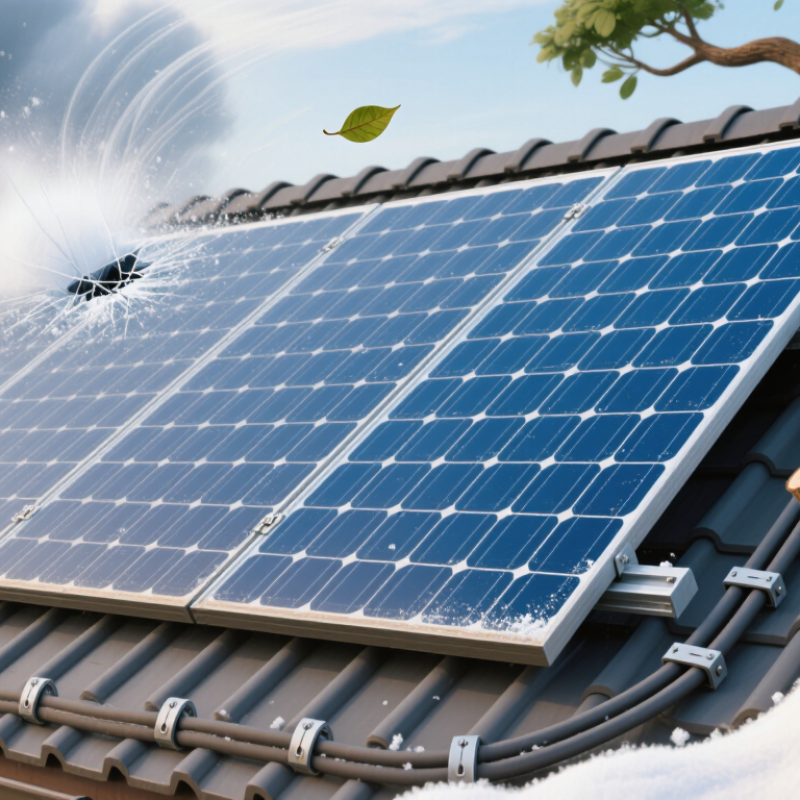
Types of Extreme Weather That Can Damage Solar Panels
Solar panels face different risks in different weather. Hail can crack glass, especially when stones are large or driven sideways by strong winds. Gusts may loosen mounting hardware or carry branches onto the array. Heavy snow can add pressure, while freeze-thaw cycles may worsen small cracks. High heat usually does not break panels outright, but it can reduce their output and stress electrical components. Lightning strikes are uncommon, yet nearby strikes can cause surges. The damage is not always obvious from the ground.
Flooding can affect inverters, wiring, and other equipment installed near ground level. Coastal storms may push salty moisture into exposed connections, encouraging corrosion over time. Dust and windblown grit can also scratch surfaces or cover cells, reducing sunlight reaching them. It is easy to focus only on dramatic hail; slow wear after repeated storms can be just as important. A visual check cannot confirm that wiring is safe or a panel is undamaged.
Tips: After severe weather, look for cracked glass, shifted panels, debris, or exposed cables from a safe place. Do not climb onto a wet or damaged roof. If anything looks unusual, arrange an inspection by a qualified solar technician.
Extreme weather can damage solar panels in different ways. Wind can stress modules and their mounts; snow adds downward load; hail can crack glass or damage cells. Common IEC qualification benchmarks include mechanical loads of 2,400 Pa and 5,400 Pa—these are test loads, not guaranteed safe limits for every installation. The IEC hail test uses 25 mm ice balls at 23 m/s. Follow local building codes and the specific module’s installation instructions.
Benchmarks: IEC 61215 series. Actual design requirements vary by module, mounting system, and site conditions.
Pre-Season Inspection of Panels and Mounting Hardware
Before storm season, inspect the array from the ground, then arrange a closer check by a qualified solar professional. Look for cracked glass, lifted frame edges, loose clamps, rust, and cables rubbing against sharp metal. Pay special attention to rail joints, roof attachments, and flashing; a small gap can admit water during driving rain. Do not walk on panels or tighten hardware by guesswork. Record clear photos and note any changes since the last inspection. NREL’s Best Practices for Operation and Maintenance of Photovoltaic and Energy Storage Systems recommends planned inspection and maintenance; a written record makes small changes easier to spot.
Check mounting hardware against the system’s installation documents, including specified fastener torque and approved attachment spacing. IEC 61215-2 includes a 2,400 Pa static mechanical-load test, with a 5,400 Pa option for module qualification. Those lab test levels do not guarantee that a particular roof-mounted array can withstand local gusts, debris, or aging fasteners. That distinction is easy to miss. Ask the installer to compare the array’s design with local wind and snow exposure, and to inspect roof penetrations for movement or failed sealant. If a clamp looks shifted, document it and keep clear until a professional assesses it.
Securing Solar Panels Against Wind and Hail
Wind and hail protection starts with the mounting system, not just the solar panels. Strong gusts can create uplift at roof edges and corners, where pressure changes quickly. Panels should be attached to suitable roof framing with hardware specified for the system and local wind conditions. A qualified installer can check rail spacing, fastener placement, and roof condition. Tightening bolts without guidance may cause damage.
Wind finds weak points. Hail-rated modules can withstand defined impact tests, but no panel is indestructible. Large hail may crack glass, loosen connections, or leave damage that is hard to see from the ground. After a severe storm, look for visible cracks, shifted panels, debris, or sudden changes in system output. Do not climb onto a wet or damaged roof. A neat-looking array is not proof that every connection is sound; that uncertainty deserves attention.
Tips: Before storm season, ask a qualified solar professional to inspect mounts, roof attachments, and exposed wiring. Keep installation records and note normal system output for comparison. After hail, photograph damage from a safe location and arrange a professional inspection before touching the equipment. Avoid improvised covers; they can catch wind or strike the panels.
Protecting Panels from Snow, Ice, and Heavy Rain
Snow, ice, and heavy rain can stress both solar panels and the roof beneath them. Before winter, inspect the system from the ground for loose cables, cracked glass, or debris near the roof edge. After a storm, look again when conditions are safe. Small changes can be easy to miss.
A thin layer of snow often slides off panels as they warm, but packed snow may remain. Never climb onto icy roofing or scrape panels with a shovel; both actions can cause falls or damage. If snow buildup is persistent, follow the system maker’s guidance or ask a qualified solar professional about safe removal. Avoid pouring hot water on panels. The sudden temperature change may harm the glass.
Ice can block drainage and add weight around roof edges. Keep gutters and nearby drains clear before storms, but do not chip ice beside the array. Heavy rain should run off without pooling around roof penetrations. From the ground, check for sagging gutters, water stains indoors, or new damp patches after rainfall. If you notice them, arrange a roof and electrical inspection rather than opening equipment yourself. I’d be cautious about assuming a panel is fine just because it still produces power; that isn’t a complete inspection.
How to Protect Solar Panels from Extreme Weather: Snow, Ice, and Heavy Rain
| Weather condition |
Main risks |
Before the weather arrives |
During or after the event |
Avoid |
| Snowfall and snow cover |
Snow can temporarily block sunlight and reduce electricity production. Heavy accumulation may add load to the roof and mounting system. |
Have the roof, panels, and mounting system assessed for local snow loads. Keep gutters and roof drainage paths clear before winter. |
Allow snow to melt and slide off naturally when it is safe to do so. If removal is necessary, use a method recommended by the system installer and work from a safe position. |
Do not walk on panels or the roof, strike the glass, or use metal tools or abrasive materials to remove snow. |
| Ice and freezing rain |
Ice can make roofs and access areas slippery, obstruct drainage, and make panel surfaces or electrical equipment unsafe to approach. |
Check that drainage outlets are unobstructed and that exposed wiring and equipment are installed and secured for the local climate. |
Keep people away from icy roof areas. After conditions improve, look for visible damage from the ground and arrange a qualified inspection if needed. |
Do not chip ice from panel surfaces, pour hot water on them, or apply salt or chemical de-icers. |
| Heavy rain and wind-driven rain |
Blocked drainage can cause water pooling or overflow. Wind-driven rain may reveal weaknesses in roof flashing, penetrations, or electrical enclosures. |
Maintain gutters and downspouts. Ask a qualified professional to check roof flashing, cable entries, and equipment enclosures as part of routine maintenance. |
After the storm, check accessible areas for leaks, standing water, loose components, or visible cable damage. Have suspected faults assessed by a qualified solar professional. |
Do not open electrical enclosures or touch wet, damaged, or exposed wiring. |
| Freeze–thaw cycles |
Repeated freezing and thawing can contribute to ice buildup and may expose existing weaknesses in roof drainage or weatherproofing. |
Before the season, arrange inspection of roof penetrations, flashing, mounting hardware, and drainage paths. |
Once the roof is safe to access, have a professional investigate recurring leaks, loose mounts, or water intrusion near system components. |
Do not apply sealants or make roof or electrical repairs unless you are qualified to do so. |
Safety note: Roof access and electrical work can be hazardous. Follow the system manufacturer’s instructions and local building requirements, and use qualified professionals for inspections, repairs, or snow removal when access is unsafe.
Post-Storm Inspection and Damage Assessment
After a storm, photograph the array before touching anything. From the ground, look for cracked glass, shifted panels, bent rails, loose wiring, and debris. Keep clear of downed lines and damaged electrical equipment; isolate the system only if you can do so safely. A panel may look intact while hidden cell cracks reduce output.
The IEC 61215 hail test uses 25-millimeter ice balls fired at about 23 meters per second. That benchmark helps explain panel qualification, but it cannot guarantee survival in larger hail or repeated impacts. Check the inverter and monitoring records for a sudden drop in production, then compare readings with similar weather and past performance. A 2016 review by Jordan and colleagues in Progress in Photovoltaics reported a median PV degradation rate of about 0.5% per year; this long-term benchmark can help distinguish storm-related changes from gradual decline. It is not a diagnosis. Arrange a qualified technician’s inspection when damage is visible or output remains abnormal. Ask for thermal imaging and electrical tests, not only photographs: some defects are easy to miss during a quick walk-around. Keep the inspection report and storm photos together. A spotless surface can still conceal damage.
Conclusion
How to protect solar panels from extreme weather begins with understanding the risks posed by high winds, hail, heavy snow, ice, and intense rain. Before each storm season, inspect panels for cracks or loose connections, and check that mounting hardware is secure and free from corrosion. Remove nearby branches or debris that could strike the system, and make sure drainage paths are clear.
To reduce weather-related damage, use suitable mounting and protective measures recommended for the system, and avoid walking on or attempting risky repairs to the panels. During snow or ice, let panels clear naturally when possible rather than scraping their surfaces. After severe weather, inspect the panels and surrounding equipment from a safe distance for visible damage, shifting, or water intrusion. If anything appears compromised, arrange a professional assessment before using the system as usual.

 ApexSun Solar