Why do some solar panels perform poorly in winter? The answer is rarely a single fault. Winter combines shorter daylight, weaker solar angles, cloud cover, snow, ice, and longer morning shadows. A clean, cold module can work efficiently. A shaded or snow-covered module cannot.
The International Energy Agency Photovoltaic Power Systems Programme reported that global photovoltaic capacity exceeded 1.6 terawatts by the end of 2023. That scale makes seasonal performance increasingly important for homeowners, utilities, and asset managers. Fraunhofer ISE’s Photovoltaics Report also identifies a typical crystalline-silicon temperature coefficient near -0.3% to -0.4% per degree Celsius. Cold temperatures can therefore improve voltage and efficiency, not reduce them. The bigger problem is usually available sunlight.
Snow creates a more complicated picture. NREL researcher Matthew Muller has stated, “Snow can actually help clean the panels.” That observation matters, but it is incomplete. Heavy snow can block the glass entirely, while wind-blown snow may cover only the lower edge. A pale roof can also reflect light onto tilted modules. Field results vary sharply with tilt angle, racking height, snowfall, and local shade.
This article examines why some solar panels perform poorly in winter, using performance data, field experience, and engineering evidence. It also questions common assumptions. Winter underperformance is not always a panel-quality issue. Sometimes, the real culprit is design, maintenance, or an unrealistic production forecast.
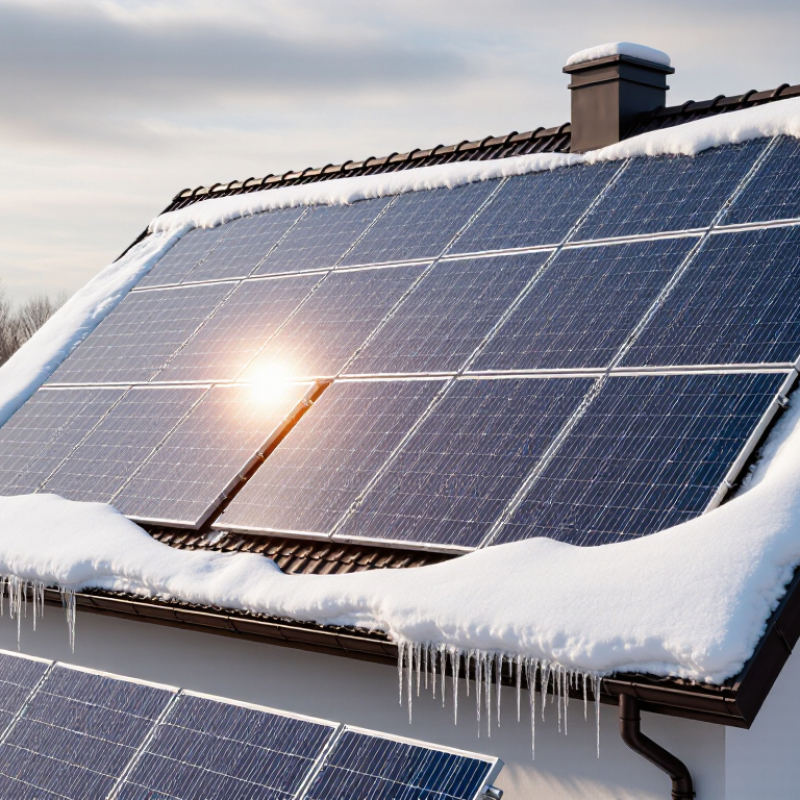
In 2026, even the best solar panels can perform poorly during winter. The main issue is not simply cold weather. Winter changes the conditions panels need for strong electricity production. Days become shorter, and the sun stays lower above the horizon. Its light travels through more atmosphere before reaching the panel surface. Cloud cover can reduce direct sunlight for several hours.
My first winter assumption was wrong: colder panels can work efficiently, but they receive less usable sunlight. Snow creates another problem. A thin layer can block cells, while nearby snow may reflect extra light after clearing. Ice, frost, and long shadows from trees or buildings can also reduce output. In my experience, morning readings often look disappointing, then improve after frost melts. That pattern needs checking, not guessing. A monitoring system can reveal whether the problem is weather, shading, or a technical fault.
Tips: Keep panels clear only when it is safe. Do not climb onto a snowy roof. Use a soft, approved tool, and avoid scratching the surface. Compare daily production with sunlight levels, not temperature alone. Check inverter warnings and inspect cables visually from the ground. If output stays unusually low after clear weather returns, ask a qualified solar professional to test the system. Human judgment still matters. Metrics can mislead.
Winter sunlight does not simply disappear; it arrives from a lower angle and travels through more atmosphere. That longer path scatters and absorbs more light before it reaches the panel. Shorter daylight hours also reduce the available generation window. The roof may look bright. Output can still fall.
At a low angle, sunlight strikes the glass less directly. Some radiation reflects away instead of entering the solar cells. A fixed rooftop array may therefore receive weaker usable irradiance, even under clear skies. Nearby trees, chimneys, and roof edges cast longer shadows across the modules. A thin snow layer can block light almost completely. Cold air helps cell efficiency, but it cannot compensate for missing sunlight.
In a winter assessment, I would compare hourly production with solar-position data, not just monthly totals. This reveals whether low sun, shading, or snow causes the largest loss. Tilt adjustments can help, but they may increase wind load and installation cost. Cleaning snow safely matters. Aggressive scraping can damage surfaces. Even careful estimates remain imperfect because clouds change quickly and roof conditions vary. A site-specific review is more trustworthy than a generic winter percentage.
Northern Hemisphere winter-solstice solar geometry and key factors affecting photovoltaic energy production
| Data dimension | 25°N | 35°N | 45°N | 55°N | 65°N |
|---|---|---|---|---|---|
| Example locations | Subtropical regions | Mid-latitude regions | Temperate regions | Northern regions | High-latitude regions |
| Winter-solstice solar altitude at local solar noon | 41.6° | 31.6° | 21.6° | 11.6° | 1.6° |
| Approximate daylight duration on the winter solstice | 10.5 hours | 9.7 hours | 8.6 hours | 6.9 hours | 2.9 hours |
| Horizontal-plane noon sunlight factor* | 66.5% | 52.3% | 36.8% | 20.1% | 2.7% |
| Atmospheric path through the air | Relatively short | Moderate | Long | Very long | Extremely long near noon |
| Effect of the low sun angle | Moderate reduction in power density | Noticeable reduction in power density | Strong reduction in power density | Very strong reduction in power density | Near-grazing sunlight and very low power density |
| Typical winter energy penalty from shorter daylight | Moderate | Moderate | High | Very high | Extreme |
| Snow-cover impact on a shaded module | Usually limited | Site-dependent | Potentially significant | Potentially severe | Frequently significant |
| Temperature effect on module efficiency | Cooler modules can improve voltage and efficiency | Cooler modules can improve voltage and efficiency | Cooler modules can improve voltage and efficiency | Cooler modules can improve voltage and efficiency | Cooler modules can improve voltage and efficiency |
Solar panels can perform poorly in winter, even when cold temperatures improve their electrical efficiency. The bigger problem is sunlight reaching the cells. Shorter days, low sun angles, and frequent cloud cover reduce available irradiance. Snow, ice, and frost add another barrier. A thin frost layer can scatter morning light, while wet snow may form a bright, uneven blanket over the glass.
The National Renewable Energy Laboratory’s PVWatts guidance treats snow loss as a site-specific variable, rather than a fixed annual percentage. Its models consider snowfall, system tilt, and snow coverage. The IEA PVPS Task 13 reports similar findings. Winter losses depend strongly on climate, mounting design, and how quickly snow slides away. A steep array may shed loose snow after sunrise. Packed snow and ice can remain much longer. Cold weather itself is not the main villain. Blocked irradiance is. A clean, cold panel can still produce useful power.
Tips: Keep the array visible from the ground after storms. Never scrape ice with metal tools. Use professional cleaning methods when safe access is difficult. Check production data before assuming the panels have failed. A sudden morning drop may indicate frost, not equipment damage. Snow reflection can sometimes increase output after clearing, but relying on that effect is risky. I would avoid promising a universal winter-loss number; local weather records matter more than a sales estimate.
Cold temperatures do not automatically make solar panels perform well in winter. Most photovoltaic cells become slightly more efficient as temperatures fall. However, efficiency is only one part of total energy production. Winter brings shorter days, weaker sunlight, and a lower sun angle. Clouds can also reduce the available light for several hours. Limited winter sunlight usually outweighs the small benefit of cooler cells.
My first assumption was that crisp, cold mornings would produce strong output. That idea was too simple. A field check may show a clean panel producing less energy at noon than it produces on a mild spring day. Frost, snow, nearby shadows, and a low roof angle can reduce generation further. In some systems, batteries also fill slowly because daily solar input remains small. Actual results depend on location, panel orientation, weather, and system design.
Tips: Keep panels clear of heavy snow when safe, without scraping the surface. Check the inverter data around solar noon for several clear days. Compare daily energy, not only peak power. Inspect nearby trees, vents, and winter shadows. Cold panels can look promising on paper, but sunlight still controls the harvest. A seasonal review may reveal that the original design needs adjustment.
Cold temperatures can slightly improve crystalline-silicon panel efficiency, but winter sunlight is usually the limiting factor. This representative mid-latitude Northern Hemisphere profile shows that daily solar irradiation falls sharply during winter, while lower temperatures provide only a modest efficiency benefit.
Solar irradiation is shown as average daily global horizontal irradiation. Values are rounded representative monthly climatological averages consistent with NASA POWER-style mid-latitude solar and temperature datasets. Typical crystalline-silicon modules have a temperature coefficient of approximately −0.3% to −0.5% per °C above or below the 25°C reference temperature, so cold weather helps performance only modestly compared with the much larger reduction in available winter sunlight.
Winter does not automatically make photovoltaic panels inefficient. NREL’s PVWatts documentation reports that crystalline-silicon modules typically lose about 0.3% to 0.5% output for every 1°C above 25°C. Cold, clear mornings can therefore produce strong panel efficiency. The real problems are shorter daylight, low sun angles, snow, and repeated shading from nearby trees.
Keep panels clear, but do it safely. A thin snow layer can block most incoming light, while uneven melting creates narrow shadows across several cells. IEA PVPS Task 13 reports that snow-related losses vary greatly by climate, tilt, and snow persistence. A steep mounting angle usually helps snow slide away. Never scrape glass with metal tools. A soft roof-safe brush is better, although manual cleaning may still cause damage if the roof is icy.
Check the array after each major storm. Review daily energy data, inverter alerts, and shading at 9 a.m. and 3 p.m. When possible, increase the panel tilt for winter sunlight by roughly 10 to 15 degrees. This requires a structure designed for seasonal adjustment, not improvised supports. Trim branches only where legally permitted and avoid unnecessary tree removal. Dust can also remain under melting snow. A cool, overcast day may look harmless, yet output can fall sharply. I have seen owners blame cold temperatures when the actual issue was one shaded, snow-covered panel. Forecast-based maintenance is useful, but it is not perfect.
Winter brings shorter days, lower sun angles, and more cloud cover. Sunlight also travels through more atmosphere. Cold cells may work efficiently, but limited sunlight usually reduces total energy.
Cooler temperatures can slightly improve panel efficiency. However, efficiency does not create sunlight. A clean panel on a cold morning may still produce less power than one on a mild spring day.
Snow, ice, and frost block or scatter light before it reaches the cells. Even a thin frost layer can weaken morning production. Wet snow may create an uneven, bright blanket.
Cleared snow can reflect extra light toward the panels. This may briefly improve output. Do not rely on it, because weather and panel conditions vary.
Compare daily energy across several clear days. Check readings near solar noon. Also compare production with sunlight levels, not temperature alone. Metrics can mislead.
Very low morning output that improves after frost melts may indicate surface blockage. A sudden drop lasting through clear weather needs closer inspection. Check inverter warnings too.
View the array from the ground first. Never climb onto a snowy roof. Use only a soft, approved tool, and avoid scraping ice or scratching the glass.
Low winter sunlight creates longer shadows from trees, vents, and nearby buildings. A roof that looked clear in summer may become shaded in January. Seasonal shading deserves a fresh check.
Ask for testing if output stays unusually low after clear weather returns. A professional can assess wiring, inverters, shading, and other faults. My first assumption might be wrong.
Why do some solar panels perform poorly in winter? The main reason is that winter changes the conditions solar panels need for strong energy production. Shorter daylight hours and lower sun angles reduce the amount of sunlight reaching the panel surface, while the sun’s rays travel through more atmosphere. Snow, ice, frost, and even accumulated dirt can further block sunlight, causing a significant drop in output until the surface becomes clear.
Although cold temperatures can help panels operate efficiently, this benefit usually cannot compensate for limited winter sunlight. Homeowners can improve seasonal performance by keeping panels free of heavy snow and debris, trimming nearby branches that create shade, checking the system for winter damage, and ensuring the panels are installed at a suitable angle for local conditions. Regular monitoring can also reveal unexpected losses and help maintain reliable energy production throughout the colder months.

ApexSun Solar