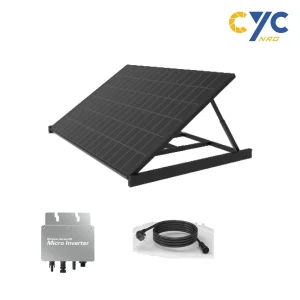

Founded in the early 2000s, Hangzhou ApexSun Solar Co., Ltd. has accrued over 20 years of technical expertise in engineering and producing high-quality photovoltaic production equipment and solar thermal configurations. The company started out as a small specialized workshop, focusing on the precision production of cell string welding machines. Over the past two decades of continuous development, it has scaled its engineering capabilities to become one of the leading manufacturers in the region, bridging the gap between solar photovoltaic (PV) hardware and commercial-grade solar thermal systems.
Hangzhou ApexSun Solar Co., Ltd.'s sustainable success is attributed directly to its unwavering commitment to technical excellence, continuous industrial innovation, and a strong focus on global customer satisfaction. By investing a significant amount of capital resources in research and development, the company continues to pioneer more efficient solar production equipment, high-performance solar water heaters, and intelligent monitoring systems that meet the strict criteria of modern green transitions.
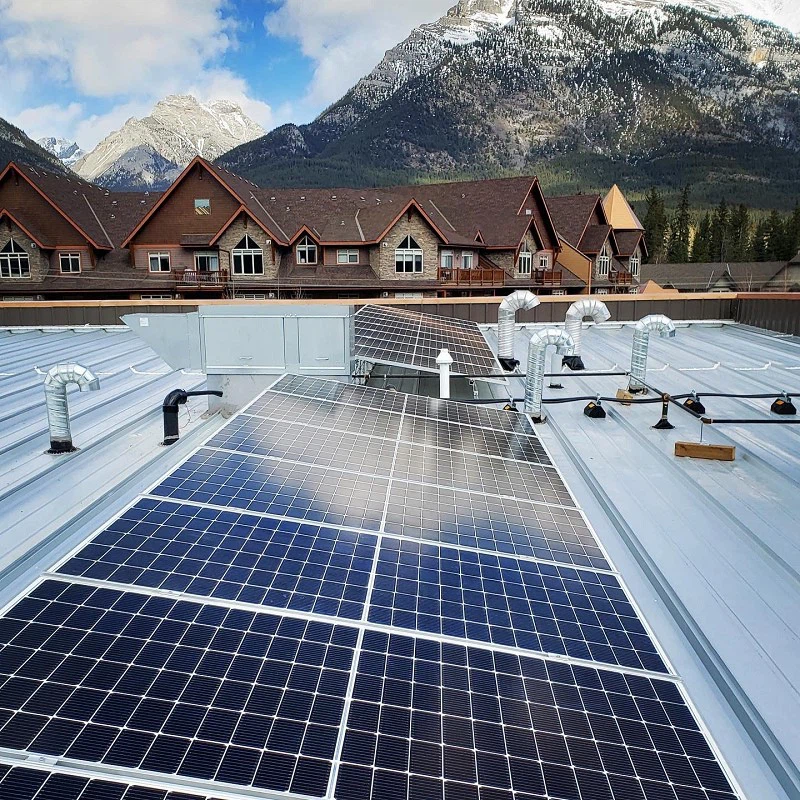
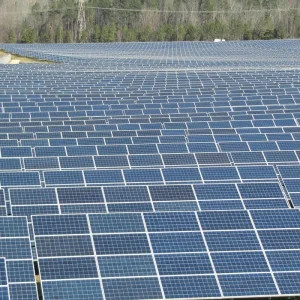
As global regulatory frameworks enforce strict carbon mitigation policies, the industrial sector is undergoing a massive transition to decarbonize heat energy. Historically, solar photovoltaic systems dominated public attention; however, over 50% of global final energy consumption is dedicated to heat rather than electricity. This is where high-temperature and pressurized solar thermal systems excel. By directly capturing solar irradiance and storing it as thermal energy, these systems bypass the conversion losses inherent in solar PV to battery storage loops.
Globally, district heating networks, chemical processes, commercial sanitization, and large-scale agricultural projects are turning to integrated solar thermal loops. The modern landscape demands highly durable systems that can interface directly with existing steam generation boilers or centralized water heating architectures. Leveraging high-efficiency collector surfaces, such as selective titanium-nitride-oxide (TiNOX) coated absorbers, contemporary systems achieve thermal efficiencies exceeding 80%, outperforming solar PV in raw energy density per square meter by a factor of three.
For equivalent thermal energy requirements, solar thermal systems require only 33% of the installation footprint compared to an electrical PV + Heat Pump configuration. This footprint reduction is critical for land-constrained urban and industrial factories seeking net-zero carbon operations.
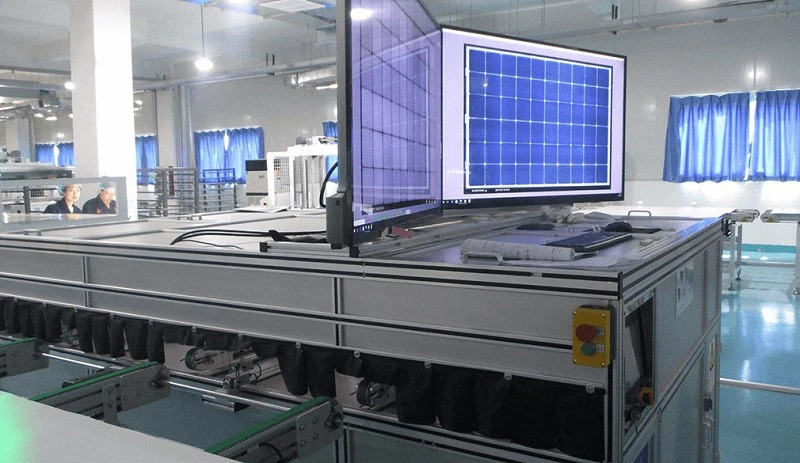
Over the years, Hangzhou ApexSun Solar Co., Ltd. has diversified its product catalog to include a wide range of state-of-the-art photovoltaic equipment and customized solar energy systems. The company's products are highly regarded for their long-term performance, structural durability, and longevity. This ensures our global industrial clients receive reliable production equipment and a highly sustainable source of thermal energy.
Our growth has not only been limited to our product categories, but also to our localized production capacity. By expanding manufacturing facilities in the Yangtze River Delta, we have incorporated advanced manufacturing technologies, fully automated robotic welding setups, and cleanroom glass-metal sealing production lines.
This geographical advantage in Hangzhou provides direct access to raw materials such as industrial-grade borosilicate glass, structural steel, food-grade SUS304/SUS316 stainless steel, and high-purity copper. Consequently, ApexSun maintains a resilient supply chain with minimal disruption risks, enabling shorter lead times and highly competitive pricing for global projects.
The technological evolution of solar thermal collection is focused on maximizing absorption, minimizing thermal emissivity, and extending system lifespans. As a leading developer, ApexSun's technology roadmap focuses on three main developments:
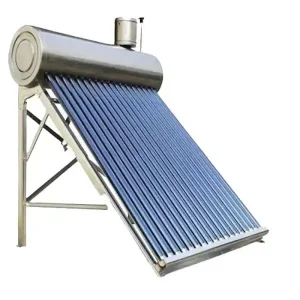
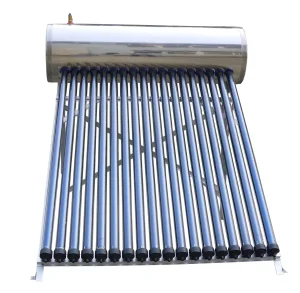
Integrating high-vacuum glass tubes with internal inorganic phase-change heat pipes. This allows fast thermal start-up times, avoids liquid freezing inside the tubes, and ensures operation down to -35°C without system damage.
Transitioning from standard stainless steel storage tanks to double-layered glass-lined enamel jacket tanks. The enamel coating provides protection against hard water scaling and galvanic electrochemical corrosion, doubling system lifespans.
Developing Photovoltaic-Thermal (PVT) hybrid systems. By cooling the photovoltaic cells with a thermal absorber back-plate, the electrical output efficiency is optimized, while simultaneously generating usable hot water for district heating.
Solar thermal configurations must be tailored to their specific localized environments. One design does not fit all. Different global regions present unique solar irradiance, temperature, and water quality conditions:
Scenario: Northern Europe & North America (Canada/Nordics).
Solution: Pressurized compact heat pipe solar systems utilizing double-glass vacuum tubes. Integrated with glycol-based heat transfer fluids to prevent freezing, ensuring heat collection in sub-zero winter temperatures.
Scenario: Middle East & Tropical Island Regions.
Solution: Enamel jacket hot water storage tanks coupled with marine-grade structural support frames. High-density outer polyurethane insulation and food-grade internal enamel liners protect the systems from high salinity and mineral-heavy water supplies.
Scenario: Food Processing & Textile Factories.
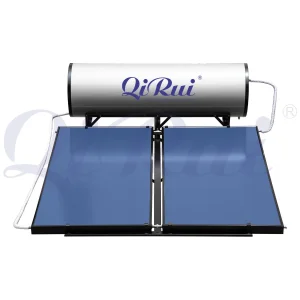
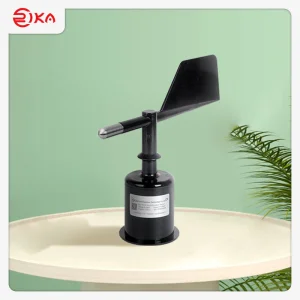
Solution: Large-scale commercial flat plate panel collector arrays connected via pressurized heat exchangers to central boilers. Smart weather monitoring sensors (like the Rika RK110-02) optimize active fluid flow rates dynamically.
Exporting solar thermal systems globally requires strict compliance with localized engineering and safety codes. At Hangzhou ApexSun Solar, we design our products to meet or exceed international regulatory benchmarks, ensuring seamless grid integration and commercial building compliance.
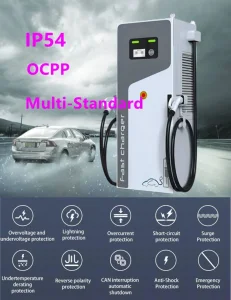
Our electrical control systems, including the high-capacity 180kW EV fast chargers and solar pump control loops, carry full TUV and CE certifications. This ensures structural integrity and high levels of electromagnetic compatibility (EMC) in industrial settings.
For domestic water systems, our enamel jacket tanks and stainless steel pressurized geysers are manufactured using non-toxic, food-grade materials. The inner coatings prevent bacterial growth (such as Legionella) and heavy-metal leaching, ensuring compliance with strict European and North American sanitary regulations.
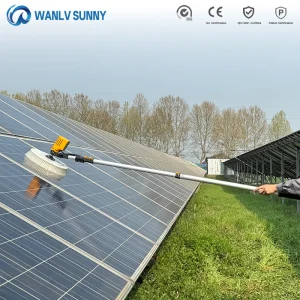
To ensure long-term reliability, we provide technical installation kits, specialized panel cleaning equipment (such as handheld photovoltaic/thermal cleaning brushes), and precise telemetry tracking sensors. Our local service partners globally receive comprehensive documentation and real-time remote support.
 ApexSun Solar