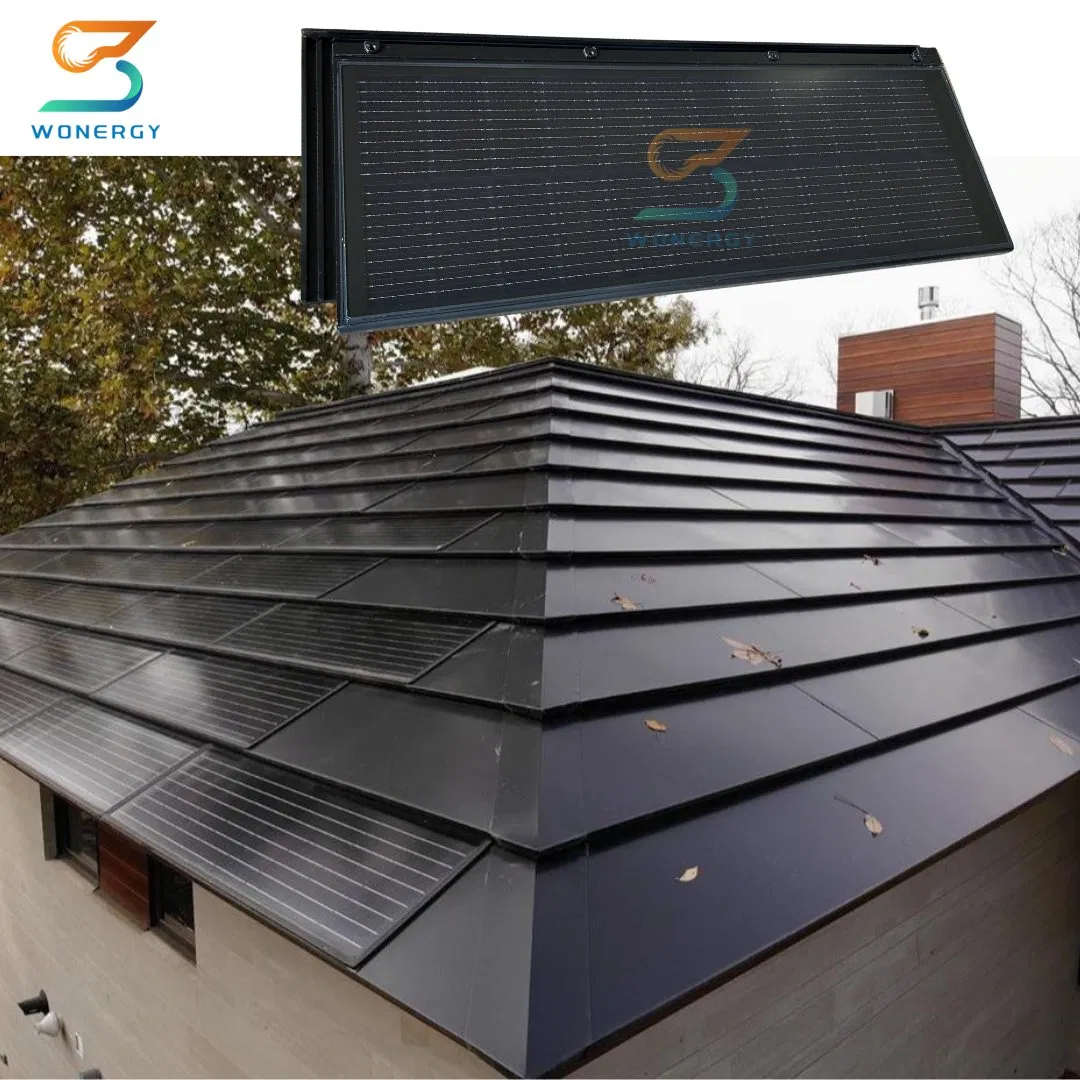
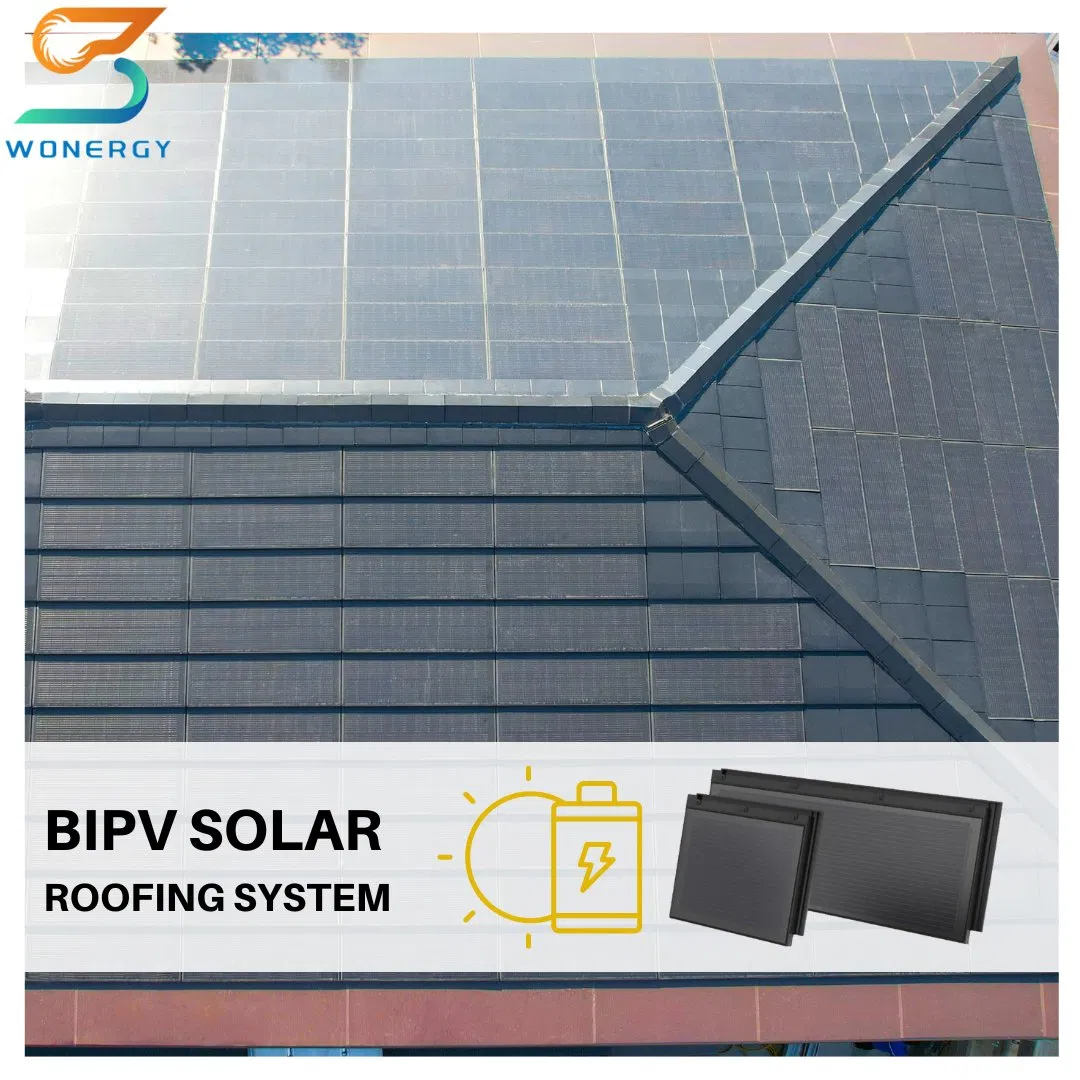
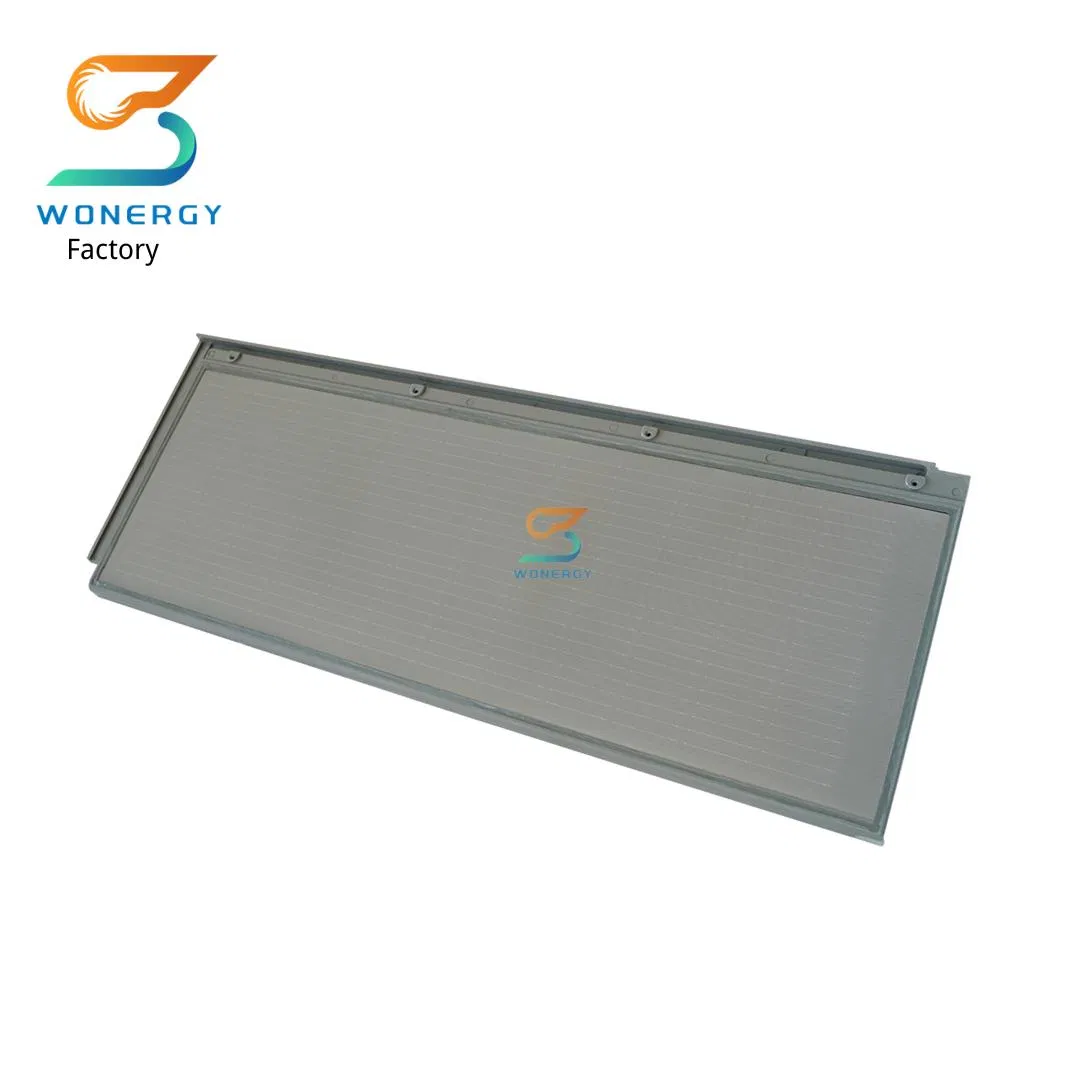
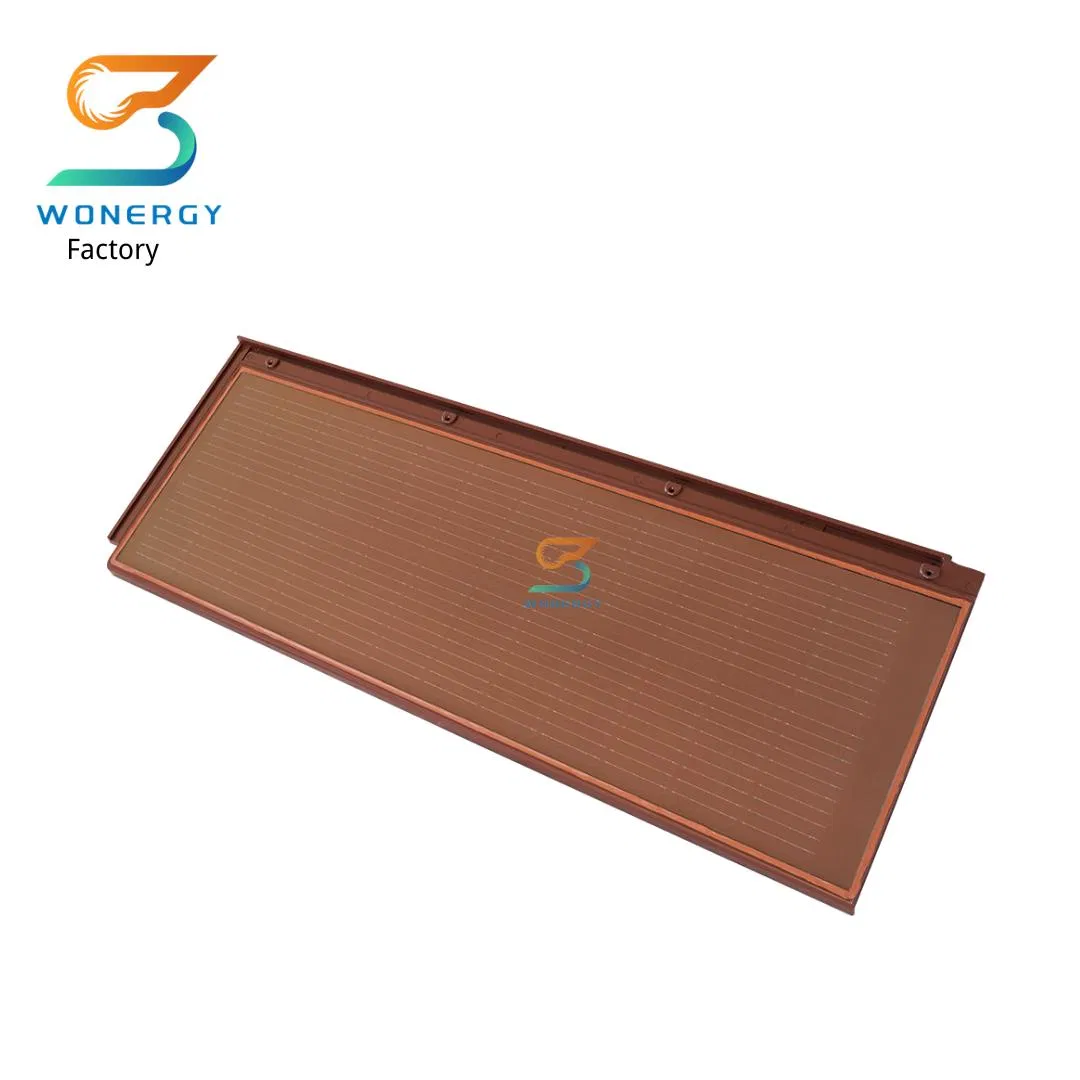
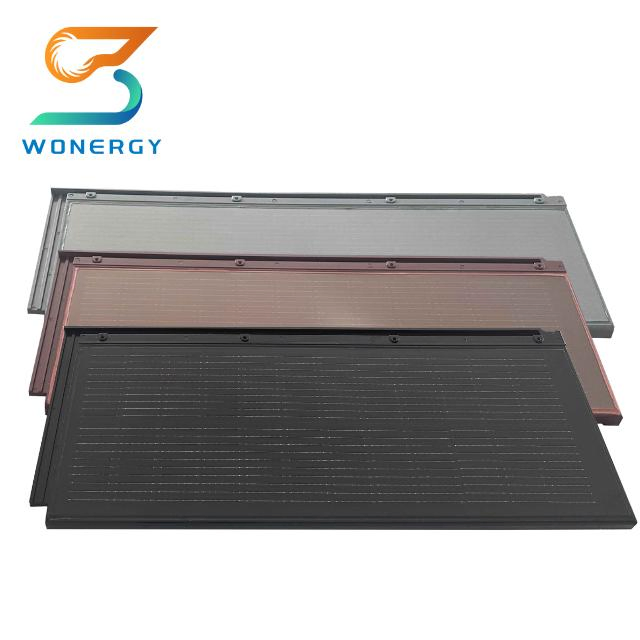
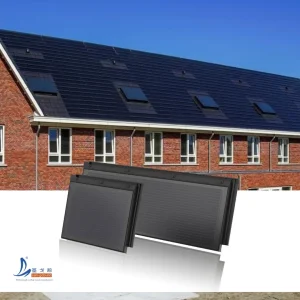
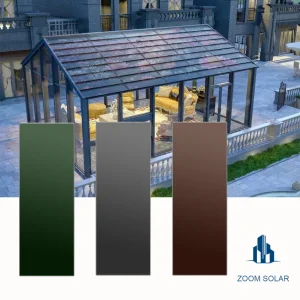
Hot Sale 90W Brunei Darussalam Monocrystalline Silicon Half Cell Solar Roof Tiles

Still deciding? Get samples of $ !
Order Sample

Product Description

i
Basic Information
Model NO.
SOLAR ROOF
Number of Cells
2*5/2*12 PCS
Application
Light Industry; Domestic
Certification
ISO, IEC61215/IEC61730
Material
Monocrystalline Silicon
Shape
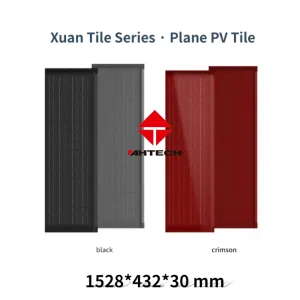
Plain
Color
Black
Glass
Tempered/3.2mm
Junction Box
≥IP67
Fireproof
Class A
Weight/Piece
9kg; 16.5kg
Production Capacity
1000 Pieces/Day
Product Description
Solar Roof Tiles
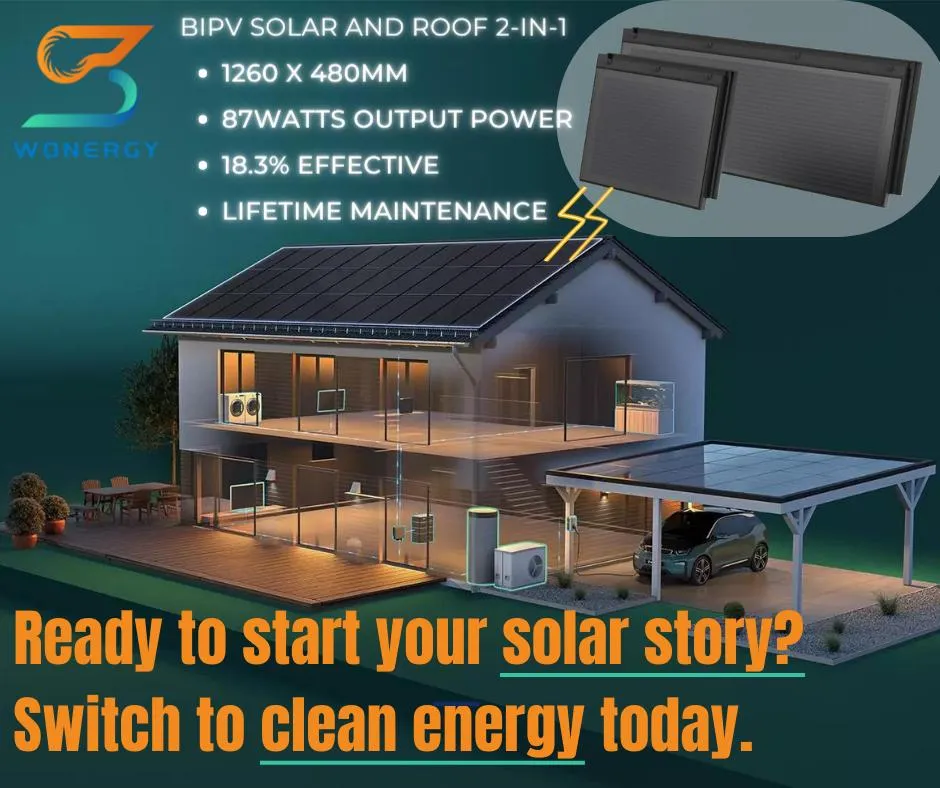
Product NameBIPV Solar Panel Powered Roof Structure Home Solar Tile Roofing
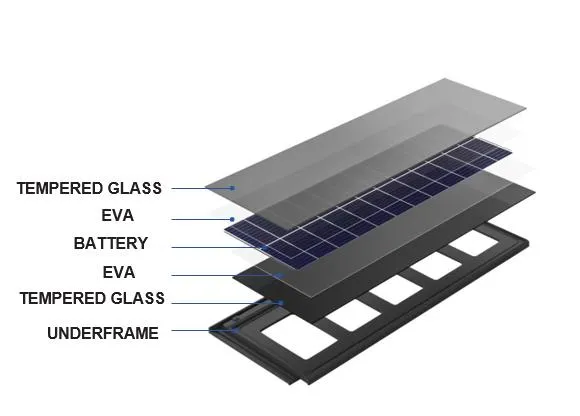
MaterialTempered glass, PVB/EVA/POB, Solar Cell, Bottom Support
Chip TypeMonocrystalline silicon
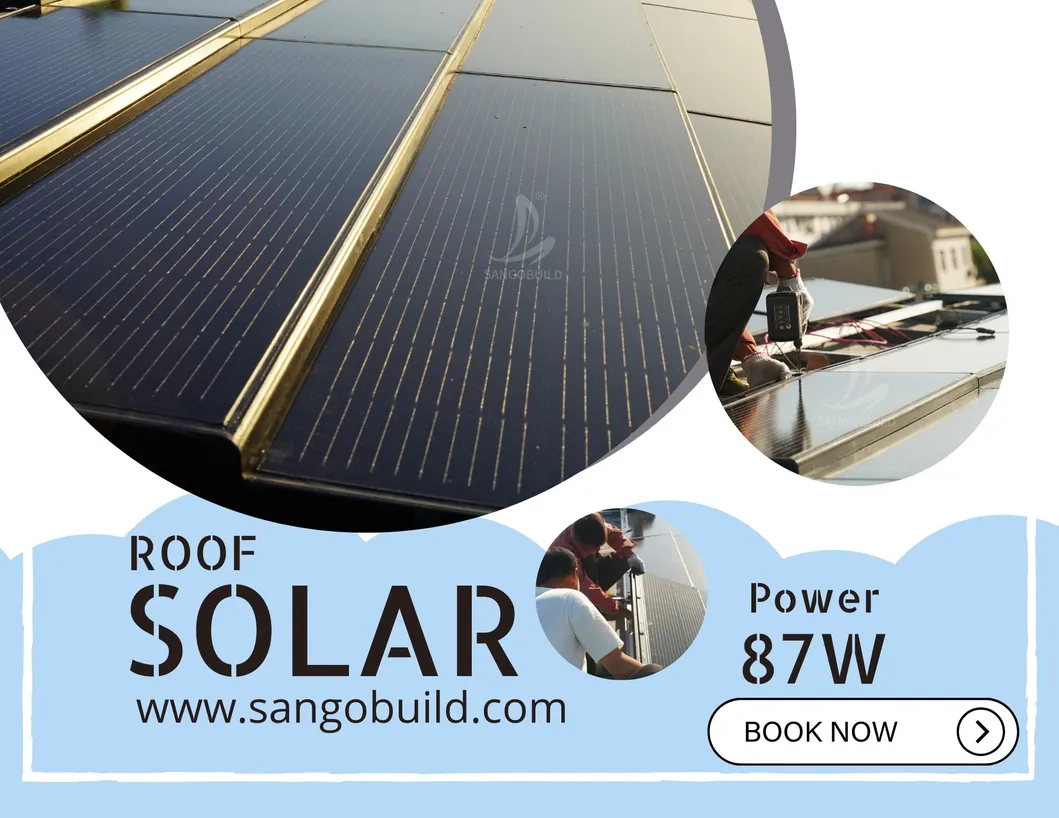
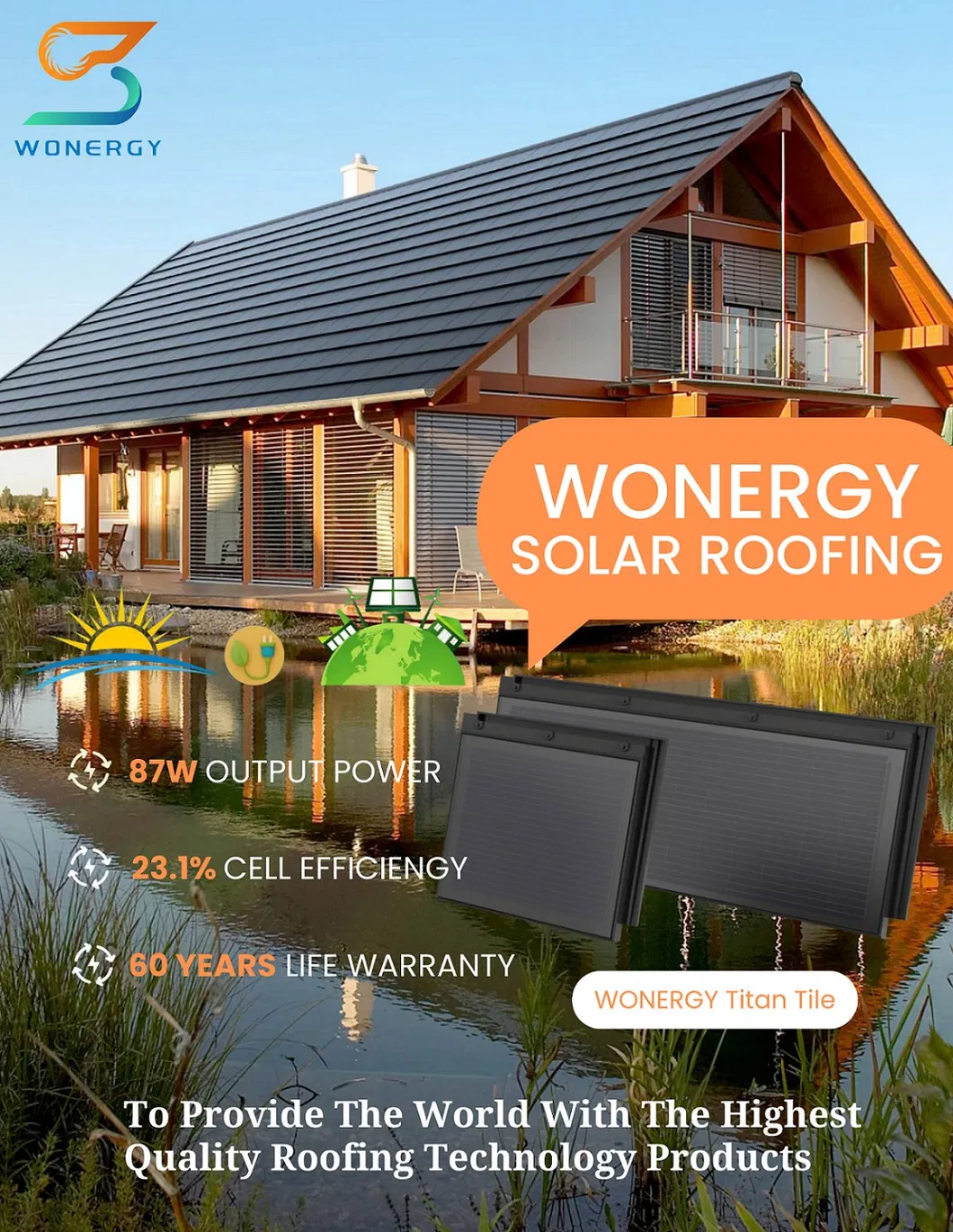
Peak Power35W; 87W
Lifespan>30 Years
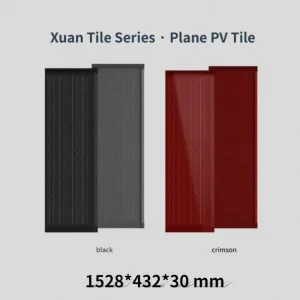
Effective Size1260*480mm / 630*480mm
Solar Tile Features
Key Features
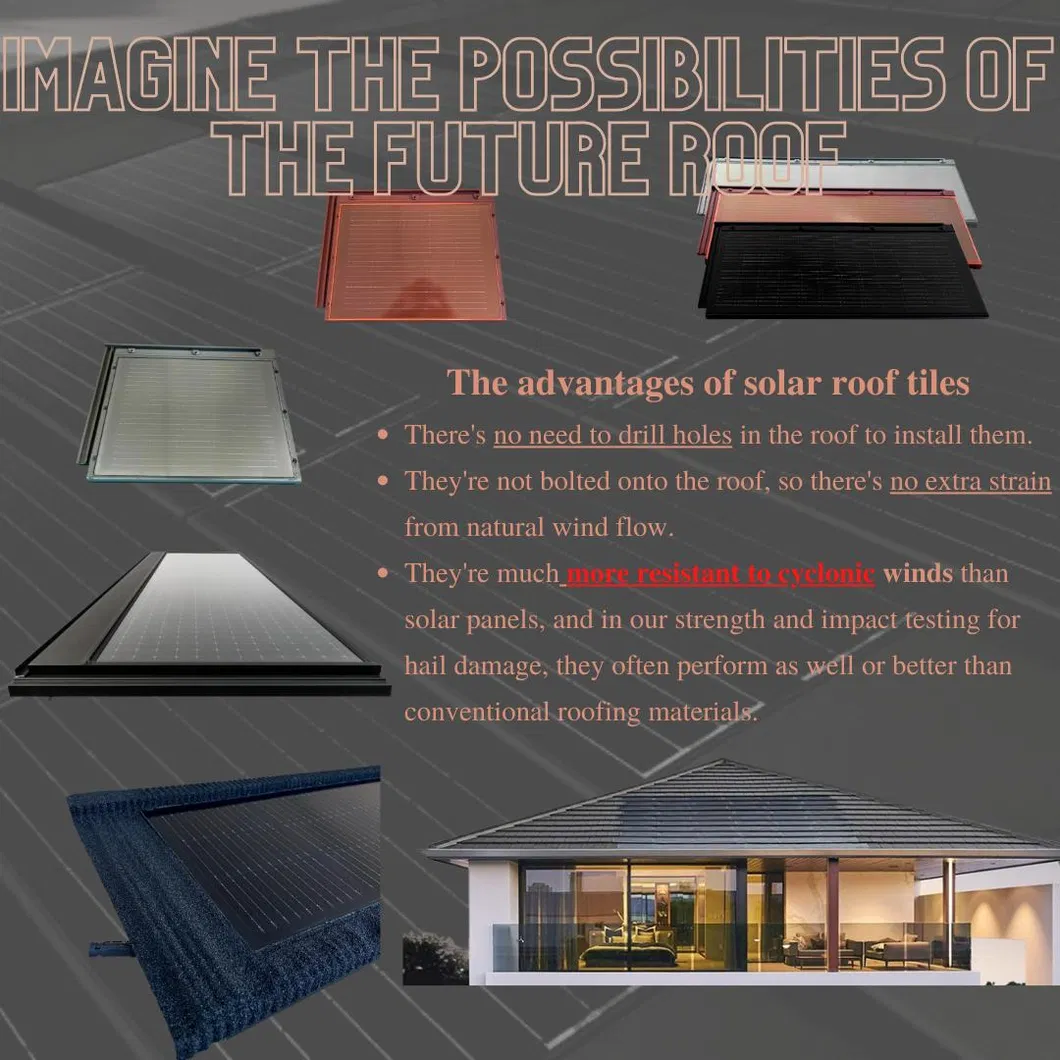
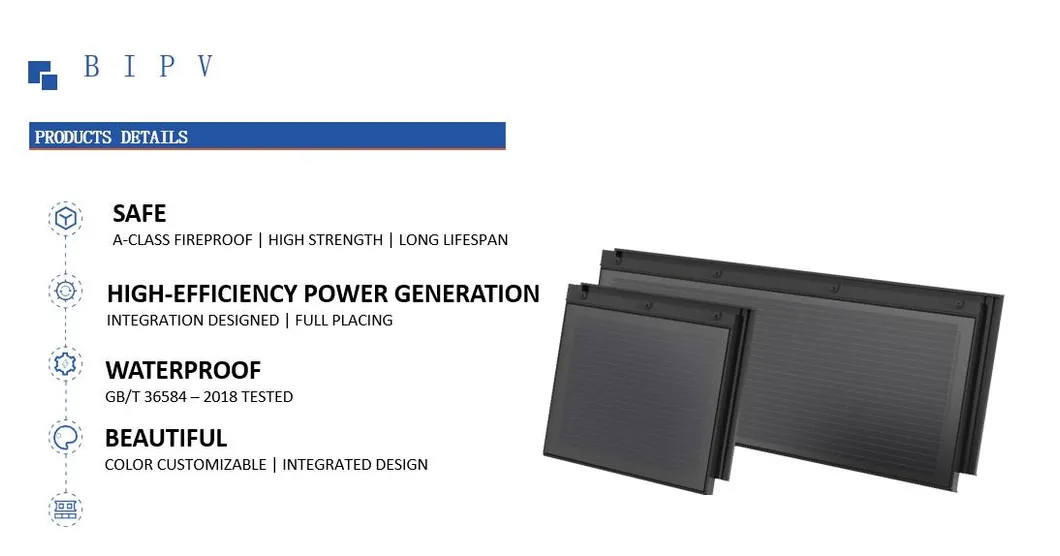
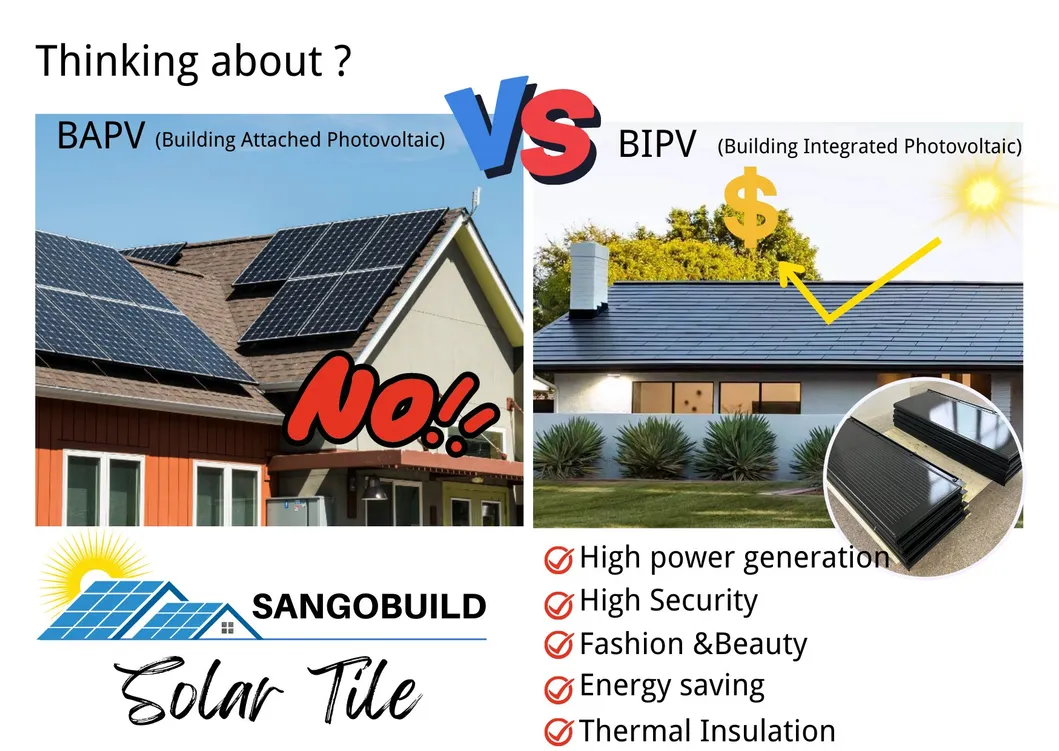
1. High Power Generation

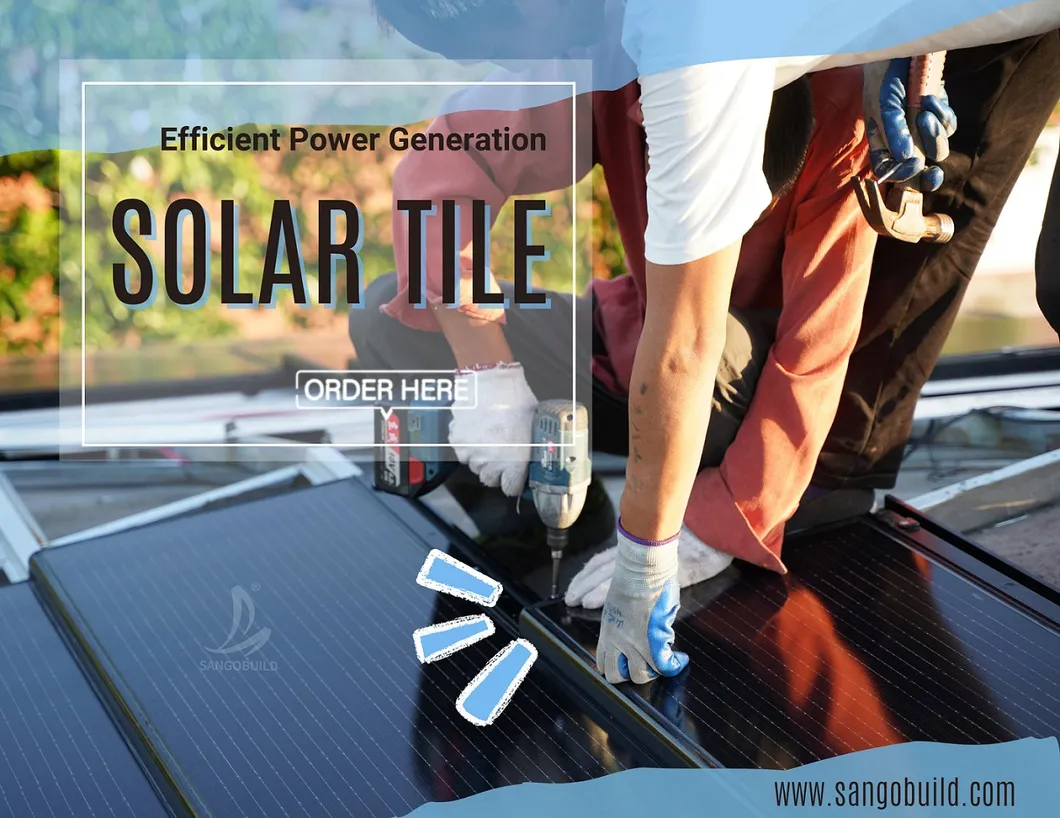
High-efficiency crystalline silicon cell technology and unique packaging process ensure superior power generation efficiency.

2. High Security

Class A fire protection and Class 15 wind protection. Excellent waterproof and shock resistance with a lifespan matching the building.

3. High Loading Capacity

Super strong structural strength, 3 times the strength of ordinary tiles. Resistant to trampling and hail.

4. Energy Saving

Unique heat dissipation structure can effectively reduce the roof temperature by up to 5°C.
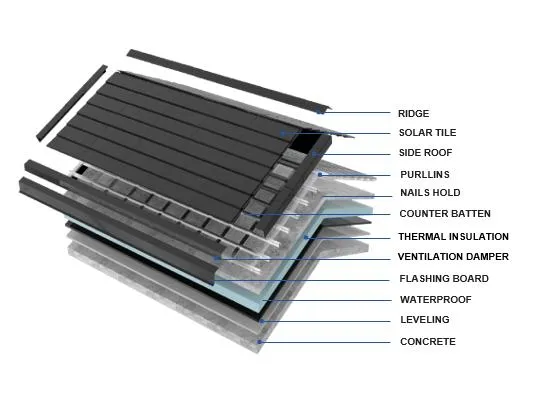
Structure
📷
Detailed Photos
📦
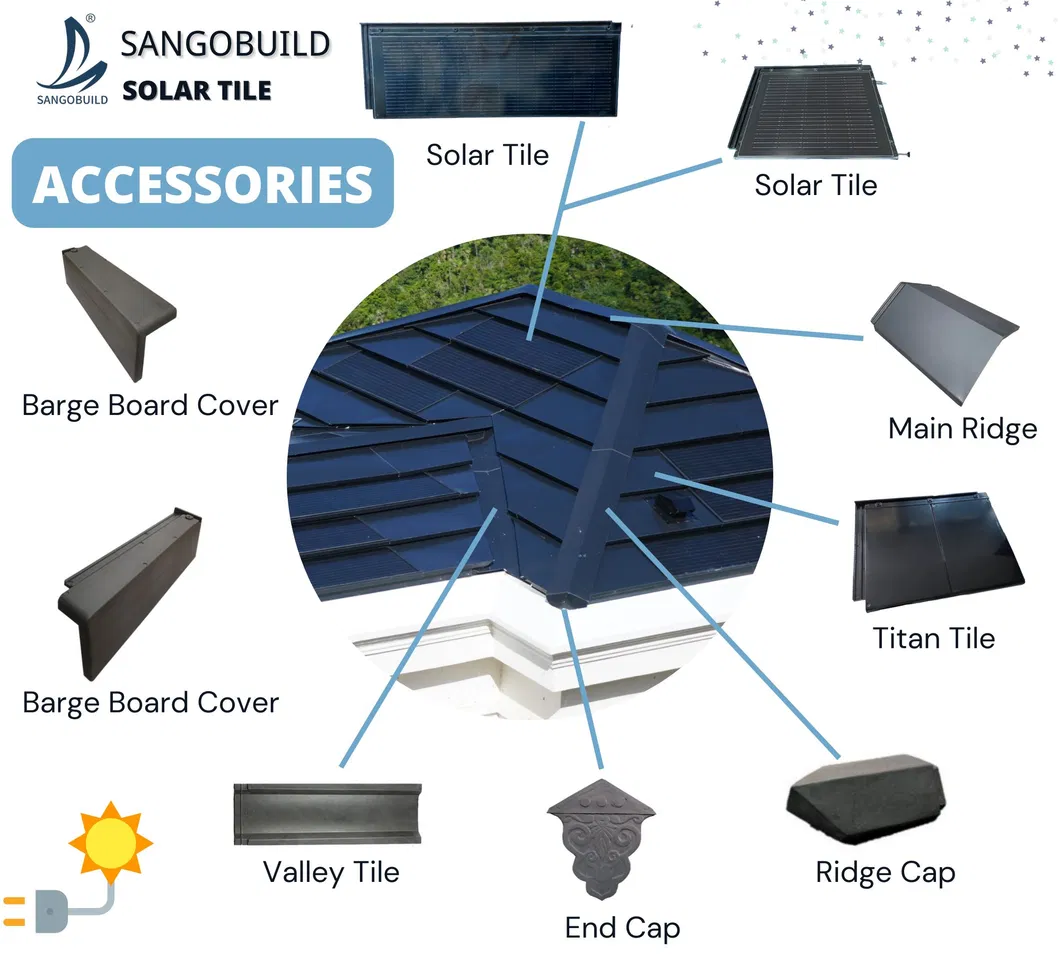
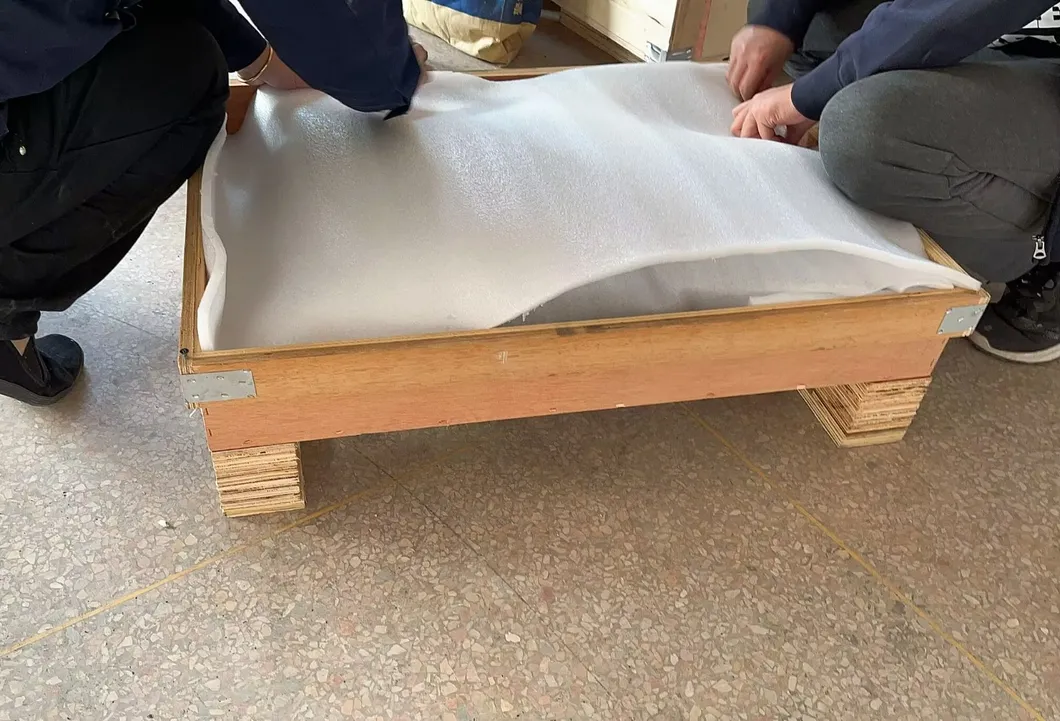
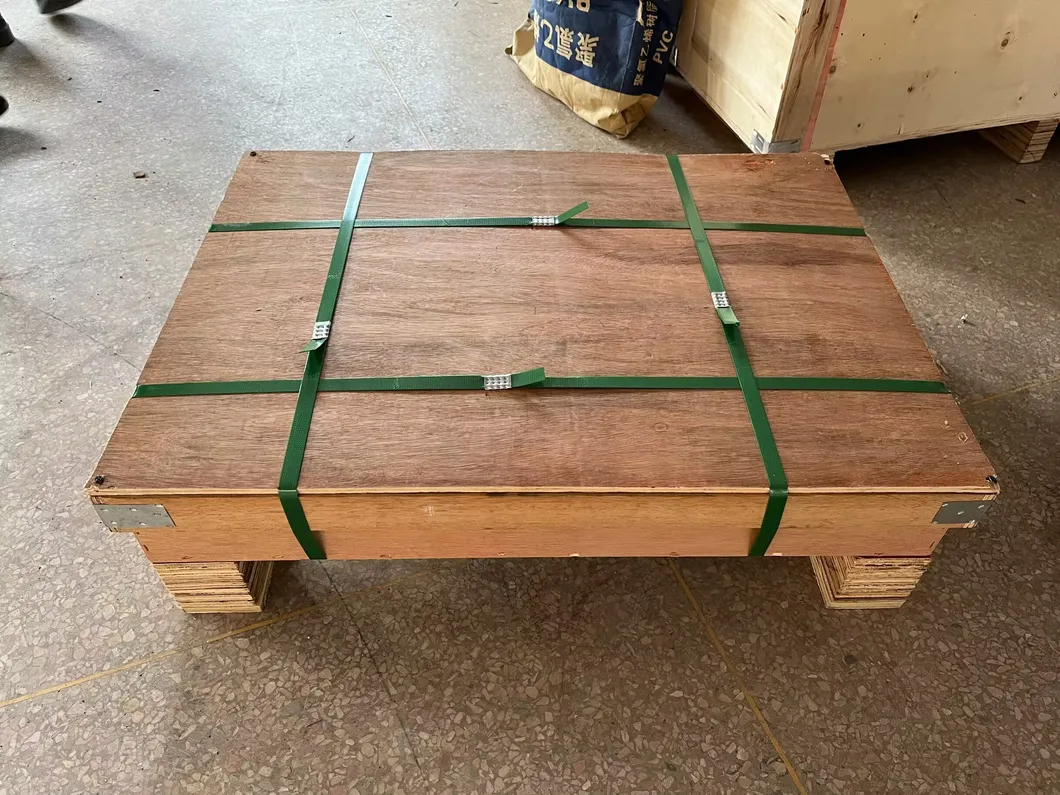
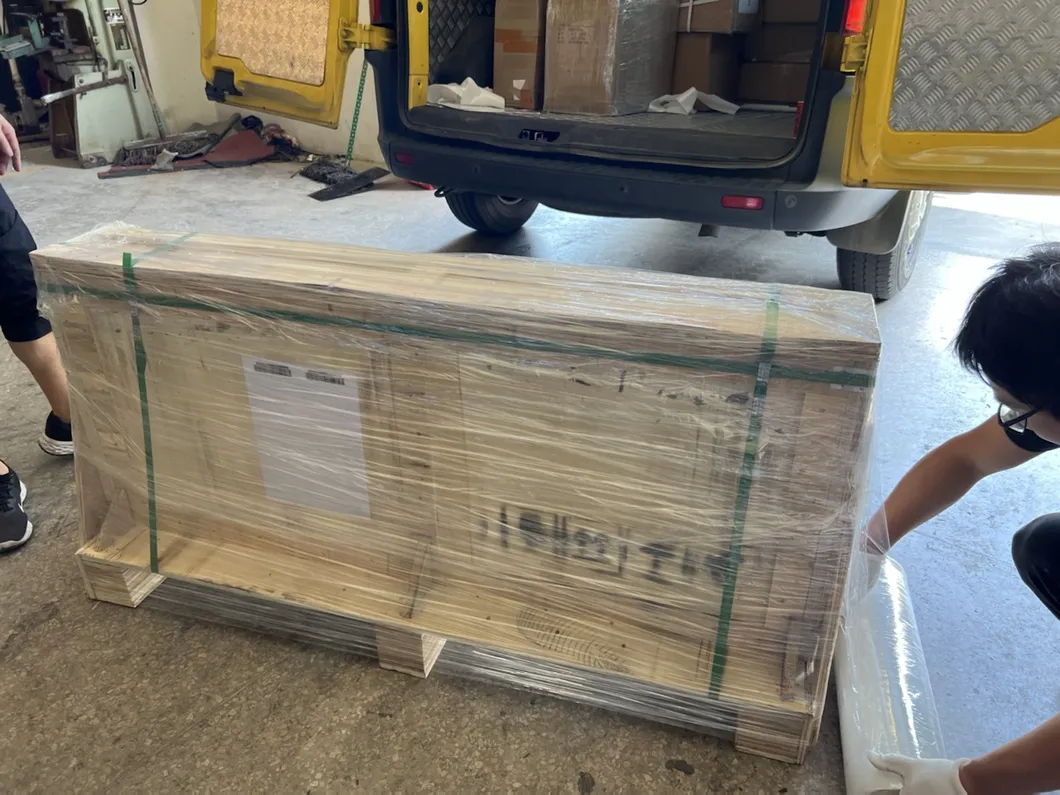
Accessories & Packaging
Accessories
🏗
Project Showcases
Project 1 Project 2 Project 3
Frequently Asked Questions
Where Can You Install Building Integrated Photovoltaics (BIPV)?
BIPV products can be used as a component of the building skin or envelope. They are primarily used for roofing but can also be integrated into facades, providing weather protection and thermal insulation while generating electricity.
What Types of Building-Integrated Photovoltaics (BIPV) Can You Buy?
Options include solar panels, tiles, or shingles that replace traditional roofing materials. Modern BIPV technology has expanded to include systems that offer noise protection, daylight illumination, and increased safety.
How Much Energy Can BIPVs Produce?
The exact amount depends on environmental factors such as solar radiation (kWh/m2/day), local climate, shading from trees or buildings, and air pollution levels which might affect efficiency.
Are BIPVs noisy during rain?
No. The design, often involving stone-coated surfaces and dead air space between the panels and roof decking, dampens exterior noise even during heavy rainstorms.
How Long do BIPVs Last?
Most solar shingles and BIPV systems are designed to last 25-30 years, which is significantly longer than traditional materials like asphalt shingles that average 15 years.
What is the weather rating for these solar tiles?
They typically feature high-grade ratings: Class A fire rating, ASTM D3161 Class F wind rating, and ANSI FM 4473 Class 3 hail rating, ensuring durability against harsh elements.

Related Products